
Why Older Homes Need Updated Wiring Before the Heating Season
Older homes carry a lot of charm, but the wiring behind the walls often tells a different story. Many houses built before 1980 still run on electrical systems that were never designed for the demands of modern winter heating. When the cold months arrive, families plug in space heaters, run furnace blower motors, and lean on electric blankets, and all of that extra load lands on wiring that may already be worn thin. That combination is exactly where trouble starts. Insulation breaks down, connections loosen, and circuits that once felt fine begin to trip or run warm to the touch. Updating your wiring before the heating season gives your home the capacity and the safety margin it needs when temperatures drop. It also protects your family from serious fire risk during the season when electrical demand peaks. This guide walks through why aging wiring struggles once winter hits and what a proper update actually involves.
How Older Home Wiring Struggles Once the Heating Season Begins
Older wiring rarely fails all at once; it degrades quietly until winter loads expose every weak point. The materials used decades ago were sized for a lighter era of lamps, radios, and small appliances. Modern heating habits pile heavy, steady current onto those same aging conductors for months at a stretch. Warning signs surface at outlets, at the panel, and in the way your lights behave every heating cycle. Recognizing those signals early is the difference between planned work and a midnight emergency. The sections below break down what to watch for, what materials commonly fail, and why winter is the season that finally pushes old wiring past its limit.
Warning Signs Your Older Home Wiring Cannot Handle the Heating Season
The clearest warning signs show up at the outlets and switches you use every single day. Wall plates that feel warm to the touch signal that connections behind them are resisting current and building heat. Discoloration or scorch marks around a receptacle point to arcing, which is a serious fire hazard that only gets worse. If you smell a faint burning odor near an outlet and cannot trace it to anything obvious, treat it as urgent. Buzzing or crackling sounds from a switch also mean the wiring inside is starting to fail. These symptoms tend to intensify in winter because heating devices pull more current through those same worn points. You should never ignore them once the cold weather sets in. Each one is your home asking for help.
Lights that flicker or dim every time the furnace kicks on reveal a system straining under load. A furnace blower motor draws a heavy surge of current the moment it starts, and healthy wiring absorbs that surge without any visible flicker. When your lights dip on every heating cycle, the circuit is likely undersized or the connections have gone loose. Frequent breaker trips or blown fuses during winter are another loud signal that demand has outrun supply. Older panels often run at just 60 or 100 amps, which leaves almost no room once heaters and blowers stack up together. You may find yourself resetting the same breaker several times in a single evening. That pattern is not normal, and it should never be treated as a routine chore.
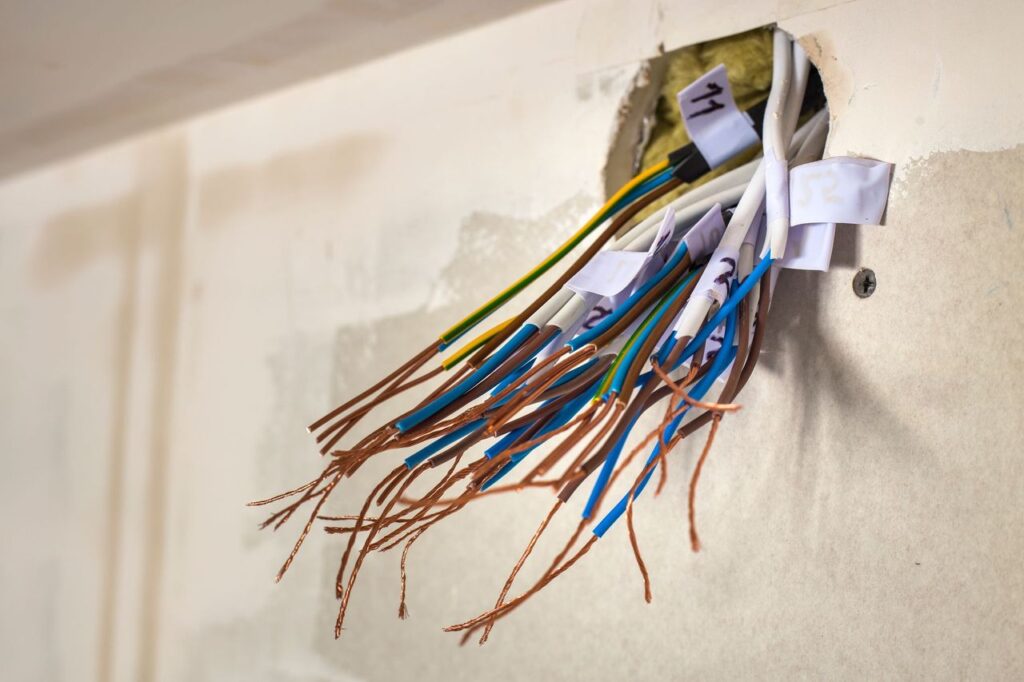
Some of the most serious warning signs stay hidden until an electrician opens the walls or the panel. Two prong outlets throughout the house indicate an ungrounded system, which offers no safe path for fault current to clear. Cloth insulated conductors and brittle sheathing crumble the moment they are disturbed, leaving bare copper exposed inside the wall. Aluminum branch wiring from the late 1960s and early 1970s loosens at its terminals as it heats and cools through the seasons. A fuse box in place of a breaker panel dates the system and sharply limits your protection. Any one of these findings means your wiring predates modern safety standards. A thorough inspection turns these hidden risks into a clear, prioritized plan. Need a full evaluation of your older home? Click here for our electrical inspection service.
Common Wiring Types in Older Homes That Fail During the Heating Season
Knob and tube wiring ran through countless homes built before the 1950s, and plenty of it still carries current today. This system used ceramic knobs to suspend single conductors and ceramic tubes to pass those wires safely through the framing. It has no ground wire, so it cannot support the three prong appliances and safety devices that modern heating equipment relies on. The rubberized insulation dries out and cracks after decades of service, leaving conductors exposed inside the walls. Homeowners often bury knob and tube under blown in insulation, which traps the very heat the system was designed to release into open air. That trapped heat speeds up insulation failure and raises fire risk sharply once the heating season begins. Many insurers now refuse or surcharge policies on homes that still run active knob and tube. Replacing it is one of the smartest winter safety investments an older home can make.
Aluminum branch wiring appeared widely between 1965 and 1973 when copper prices climbed and builders looked for a cheaper option. Aluminum expands and contracts far more than copper as current flows and stops, and that constant movement slowly loosens the screw terminals at outlets and switches. Loose connections build resistance, resistance builds heat, and heat is exactly what you do not want inside a wall during winter. The metal also oxidizes over time, forming a dull layer that further resists current at every junction. These weak points tend to concentrate at the same outlets where families plug in their space heaters. That is why aluminum wired homes see noticeably elevated fire risk once heating loads climb. A qualified electrician can remediate those connections properly or rewire the affected circuits entirely.
Older cloth insulated wiring and early plastic sheathing also degrade in ways that matter once the furnace runs all day. The outer jacket grows brittle and flakes away, and the paper or cloth beneath it offers little protection against abrasion or heat. Undersized 60 amp services simply cannot deliver the amperage a modern winter household demands. When you add electric heat, a well pump, and holiday lighting to an old service, the math stops working. Ungrounded circuits leave surge protection and GFCI devices without the reference they need to function correctly. Each of these conditions compounds the others once cold weather drives demand steadily upward. Upgrading the wiring and the service together is the only way to close these gaps for good.
How Winter Heating Loads Overwhelm Older Home Wiring
Winter changes the electrical profile of a house more dramatically than any other season. A single portable space heater draws around 1500 watts, which works out to roughly 12.5 amps on a standard 120 volt circuit. That one device can occupy most of a 15 amp branch circuit by itself, leaving little room for the lamps, chargers, and televisions sharing the same wire. Families rarely run just one heater, so several circuits sit near their limit at the same moment. Furnace blower motors, boiler circulators, and heat tape all add steady draw on top of that. Electric blankets and holiday lighting quietly fill in whatever headroom remains. Older wiring built for a lighter era was simply never sized for this stacked demand. The result is a system that runs hot for months at a stretch.
Heat is the enemy of aging insulation, and winter keeps the heat coming for weeks on end. Every amp that flows through an undersized or corroded conductor generates warmth at the points of highest resistance. In a modern home those points barely register, but in an older home they sit at loose terminals and cracked splices. Over a long heating season, that repeated warming and cooling fatigues both the metal and the insulation around it. Connections that held perfectly well through summer can finally give out in January. This is a major reason so many house fires cluster in the coldest months of the year. Prevention before the season always beats an emergency call in the middle of it.
Voltage drop is another quiet consequence of overloaded older wiring that few homeowners recognize. When too much current travels through wire that is too small or too long, the voltage at the outlet sags below what your appliances expect. Motors then pull even more current to compensate, which heats the wiring further and shortens the life of your furnace and appliances. You may notice lights that stay dim, heaters that never quite reach temperature, and electronics that behave erratically. These are all symptoms of a system being pushed well past its original design. Updated wiring restores full voltage and steady performance to every circuit in the house. Ready to bring your circuits up to modern capacity? Click here for our electrical wiring service.
What Updated Wiring in an Older Home Includes Before the Heating Season
Updating the wiring in an older home is a structured process, not a single quick fix. A licensed electrician begins by mapping the existing circuits and identifying the outdated materials hiding in the walls and the panel. From there, the work usually spans new conductors, upgraded outlets, a modern panel, and current safety devices. The goal is a system sized for how your family actually lives through the coldest months. Each part of the project builds on the others, so the sequence genuinely matters. Done correctly, an update sets your home up for decades of safe and reliable heating seasons.
Rewiring and Circuit Upgrades That Prepare an Older Home for the Heating Season
Rewiring replaces the aging conductors that no longer meet code or capacity requirements. An electrician pulls new copper wire rated for the loads your household places on it, sized correctly for each individual circuit. Grounded three wire cable takes the place of ungrounded knob and tube or brittle cloth wiring. New receptacles and switches replace worn devices where backstabbed connections and loose terminals once created hot spots. The team routes fresh cable through walls, ceilings, and floors with as little disruption as the layout allows. Every splice moves into an accessible junction box instead of hiding loose behind plaster. This rebuilds the backbone your heating equipment depends on all winter long. The finished system carries peak seasonal loads without ever running hot.
Circuit upgrades focus capacity exactly where your home needs it most. Kitchens, laundry areas, and any room where a space heater lives often deserve their own dedicated circuits. Splitting overloaded runs into separate circuits keeps a single heater from starving the rest of the room. An electrician can add 20 amp circuits for high draw devices so breakers stop tripping every cold evening. Thoughtful circuit design also spreads load evenly across the panel rather than piling it onto a few legs. That balance reduces heat at the busiest connections throughout the house. The payoff is a home that handles peak winter demand quietly and safely.
The rewiring stage is also the ideal moment to correct code deficiencies that accumulated over the years. Many older homes hold layers of amateur additions, junction boxes buried in walls, and circuits stretched far past their intended reach. An electrician documents every one of these problems and brings each up to current standards. Arc fault and ground fault protection get integrated wherever the current code now requires them. Outlets land at proper heights and spacings so extension cords stop filling the gaps. This is careful, code driven work that a licensed professional should always handle. The result stands up to inspection and to years of hard winters.
Panel and Service Upgrades That Support Older Home Wiring in the Heating Season
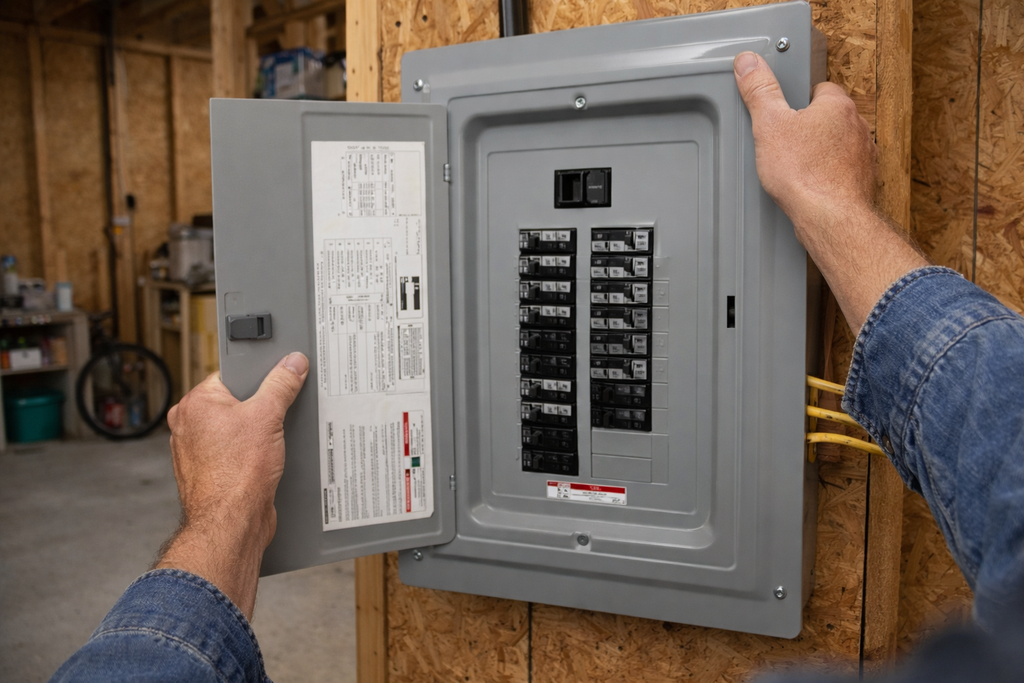
A panel upgrade often anchors a full wiring update in an older home. Fuse boxes and 60 or 100 amp panels simply lack the capacity for modern winter loads. Replacing them with a 200 amp service gives your home the headroom to run heating equipment, appliances, and future upgrades all at once. A new panel also brings modern breakers that respond faster and more reliably than aging fuses ever could. It creates the space for the dedicated circuits your heaters and furnace deserve. The upgrade includes fresh grounding and bonding, which older systems frequently lack entirely. Together these changes turn a strained service into a dependable one. Peak winter demand stops being a gamble.
The service upgrade reaches from the panel all the way out to the utility connection. Older service entrance cable, meter bases, and masts wear out and can no longer carry increased amperage safely. An electrician coordinates with the utility to upsize the service and replace the weathered components outside your home. Proper grounding electrodes and bonding tie the whole system to earth so any fault clears the way it should. This groundwork is what lets surge protection and GFCI devices actually do their jobs. Skipping it leaves modern safety gear without the solid foundation it needs. A complete upgrade addresses the wiring, the panel, and the service as one connected system.
Timing a panel and service upgrade before winter avoids the worst case scenario of losing power in freezing weather. Utilities and inspectors move slower during peak season and during storms, which stretches out any emergency work. Handling the upgrade in the calmer months means your heating system meets the cold with a service built to support it. It also lets you plan for additions like a generator or an EV charger while the panel is already open. That kind of foresight saves real money and disruption down the road. A modern service is the quiet foundation of a safe winter home. Is your panel ready for winter demand? Click here for our electrical service upgrade.
Safety Devices That Protect Updated Older Home Wiring During the Heating Season
Modern safety devices turn an updated system into a genuinely protected one. Ground fault circuit interrupters guard wet and outdoor locations by cutting power the instant they sense current leaking to ground. Arc fault circuit interrupters watch for the dangerous arcing that loose or damaged wiring produces, and they trip before that arc becomes a fire. Both devices depend on the grounded, updated wiring an older home gains during a rewire. Installed at the panel or the outlet, they add a layer of protection your original system never had. During heating season, when circuits run hot and hard, these devices monitor every single cycle. They catch faults that a person would never notice in time.
Whole house surge protection defends your electronics and heating controls from damaging voltage spikes. Furnaces, heat pumps, and smart thermostats now carry sensitive circuit boards that a single surge can destroy in an instant. A surge protector installed at the panel clamps down on spikes from the utility, from lightning, and from large motors cycling inside the home. Winter storms and grid switching make these spikes far more common in the cold months. Losing a furnace control board during a January freeze is exactly the emergency this device prevents. Protection installed at the panel covers every circuit in the house at once. It is a small addition that delivers outsized value.
Tamper resistant outlets, clear labeling, and correct breaker sizing round out a safe update. Tamper resistant receptacles block foreign objects and add real peace of mind in homes with children. A clearly labeled panel lets anyone shut off the right circuit fast during an emergency. Breakers matched precisely to their wire gauge trip when they should instead of letting a conductor overheat. These details separate a professional installation from a patchwork of quick fixes. Each device performs best inside a system that was updated as a complete whole. That is the standard careful electrical work should always meet.
Why You Should Update Your Older Home Wiring Before the Heating Season Arrives
Waiting until the furnace fails or a breaker melts is the most expensive way to handle old wiring. Updating before the cold arrives puts you fully in control of the timeline, the budget, and the outcome. You avoid the scramble of an emergency call during the first hard freeze of the year. You also gain months of safe, steady performance right when your home is working its hardest. The smartest path forward is a professional inspection followed by a clear, prioritized plan. From there, the work happens on your schedule instead of the weather’s.
Schedule an Electrical Inspection Before the Heating Season
An inspection is the honest starting point for any older home. A licensed electrician examines the panel, the visible wiring, the outlets, and the grounding to build a complete picture. This visit uncovers the knob and tube, aluminum, and ungrounded circuits that hide behind finished walls. You receive a plain report of what is safe, what is worn, and what needs attention first. That clarity lets you prioritize the work that protects your family the soonest. There is no guessing and no unpleasant surprise in the middle of winter.
The best time for that inspection is now, well ahead of the heating season. Scheduling in the warmer months means an electrician has room to plan and complete the work without racing the cold. It also spreads the project across a comfortable timeline instead of a frantic one. An early inspection can catch a failing connection long before it becomes an emergency in December. It gives you the time to budget for a panel or a rewire without any pressure. Planning ahead is always cheaper than reacting after something breaks.
An inspection also documents your home’s electrical condition for insurance and resale purposes. Many insurers now ask directly about knob and tube and aluminum wiring, and a clean report answers those questions with confidence. Buyers and lenders increasingly expect an updated, grounded system in the homes they finance. Correcting issues now protects both your family’s safety and your home’s value. A professional record shows the work was completed to code by a licensed team. That paperwork keeps paying off long after the winter passes.

Plan Your Older Home Wiring Update Ahead of the Heating Season
A good plan sequences the work so that each stage supports the next. The panel and service usually come first because everything else in the home connects back to them. Rewiring and circuit upgrades follow, bringing each room up to modern capacity. Safety devices and surge protection finish the job and lock in every gain. Mapping this order in advance prevents wasted effort and repeat visits. A clear plan keeps the entire project moving smoothly from start to finish.
Planning ahead also opens the door to financing and thoughtful budgeting. A full update is a real investment, and spreading it across a manageable payment can make it far easier to say yes. Edinson Electrical Solutions offers financing through Synchrony for exactly this reason. That flexibility lets you complete the safe version of the work rather than settling for a partial fix. You protect your home fully instead of patching it one piece at a time. Good planning turns a big job into a very doable one.
Planning early also lets you fold in future upgrades while the walls and panel are already open. Adding capacity for a generator, an EV charger, or a heat pump costs far less when the electrician is already on site. A little foresight now saves repeated labor and access work down the line. Your update then serves not just this winter but the next decade of them. Every choice made in advance compounds into lasting value. That is precisely what planning ahead of the heating season delivers.
Why Choose Edinson Electrical Solutions for Your Older Home Wiring Update
Edinson Electrical Solutions is a family owned and operated local business rooted in the Lehigh Valley. We are licensed and insured in the State of Pennsylvania, and every job we take reflects that responsibility. Our work is built to be compliant with code and reliable for the long haul. We treat your older home with the care it has earned over many decades. That commitment shows up in every connection we make and every circuit we test. Our neighbors trust us because we earn that trust one project at a time.
We back our work with a lifetime craftsmanship warranty on every job we complete. That warranty reflects our confidence in how carefully we wire, connect, and inspect each system. We are dedicated to providing a five star service every time, from the first inspection to the final walkthrough. Financing is available through Synchrony so the right work always stays within reach. You get a clear plan, honest pricing, and a team that actually answers the phone. We build lasting relationships, not one time transactions.
Getting your older home ready for the heating season starts with a single phone call. Reach our team at (484) 898-7788 or email info@edinsonelectrical.com to schedule your inspection. We proudly serve Hokendauqua, Allentown, Bethlehem, Easton, and communities across the Lehigh Valley. Let us update your wiring while the warm weather is still on your side. Winter always rewards the homeowner who prepared for it in advance. Call Edinson Electrical Solutions today and face the cold season with total confidence.