
How to Safely Power Holiday Lights Without Overloading Your Circuits
Holiday lighting is one of the few times each year that homeowners ask their electrical system to carry a heavy load in a place it was never really planned for, and the results show up quickly in the form of tripped breakers, warm extension cords, and dead sections of display. Most houses in the Lehigh Valley were wired with two or three exterior receptacles at most, and those outlets usually share a circuit with a garage, a basement, or a run of interior outlets that are already working during the busiest cooking and entertaining season of the year. When you add several hundred watts of lighting, a pair of inflatables, and a heated garage on top of that shared circuit, the math stops working long before the display looks finished. The good news is that a safe holiday display is mostly a matter of knowing how much power you are actually using and where that power is coming from. Understanding your circuit capacity, reading the tags on your light strings, and using the right outdoor rated cords will prevent the vast majority of seasonal electrical problems. Planning your load in early fall also gives you time to correct any wiring issues before the weather turns and the ladder work gets dangerous. This guide walks through the calculations, the code requirements, and the practical habits that keep a holiday display bright and your wiring intact.
How to Calculate Your Holiday Light Load Before You Overload a Circuit
Every overloaded circuit starts with a number that nobody added up. A standard residential branch circuit in Pennsylvania is either 15 amps or 20 amps at 120 volts, which gives you a hard ceiling of 1,800 watts or 2,400 watts respectively, and the safe working number is lower than both of those figures. Holiday lighting runs for many hours at a time, which places it in a category that requires additional headroom under the National Electrical Code. The calculation itself is simple arithmetic, and it takes about ten minutes with a notepad and the printed tags on your light strings. Once you know your total wattage, you can decide how to split the display across multiple circuits instead of finding out the hard way on the first cold night. Homeowners who do this step consistently almost never deal with a dark yard on Christmas Eve.
Adding Up Holiday Light Wattage Before You Overload a Circuit
The relationship you need is straightforward, because watts equal volts multiplied by amps, and residential lighting circuits in this area operate at a nominal 120 volts. That means a 15 amp breaker can theoretically carry 1,800 watts and a 20 amp breaker can carry 2,400 watts, though neither number represents what you should actually plan around for a display that stays on all evening. Start by locating the wattage or amperage tag molded into the plug or printed on the label near the male end of each light string, because manufacturers are required to list that information. Older incandescent C9 bulbs draw roughly 7 watts each, which puts a 25 bulb string at about 175 watts, and three of those strings alone will consume more than 500 watts. Incandescent mini lights are gentler at roughly 0.4 watts per bulb, so a 100 count string lands near 40 watts. LED strings are dramatically lighter, with many full length sets drawing somewhere between 3 and 8 watts total. Write each number down as you go and keep the list with your storage bins so you never have to repeat the work next season.
Once you have wattage figures for every string, projector, wreath, and animated figure, add them together and compare the total against the capacity of the circuit you plan to use. The mistake most homeowners make is treating each exterior receptacle as a separate power source, when in reality two outdoor outlets, the garage outlets, and sometimes a bathroom or basement receptacle are all fed by the same breaker. Anything already plugged into that circuit counts against your total, including a garage refrigerator, a treadmill, a space heater, or a workshop tool. A second refrigerator running in the garage can pull 600 watts or more during its compressor cycle, and that load will appear and disappear on its own schedule. If your list comes anywhere close to the circuit limit, the display needs to be split across two or more circuits rather than consolidated for convenience. It is far easier to run a properly rated cord to a second circuit than it is to troubleshoot a mystery outage in freezing rain.
Mapping your circuits is the step that makes all of this practical, and it only has to be done once. Plug a lamp or a radio into the outdoor receptacle, then switch off breakers one at a time until the device goes dark, and label that breaker clearly in your panel directory. Repeat the process for every receptacle you intend to use, including the garage and any covered porch outlets, and note which ones share a breaker. Many homes built before the mid 1990s have surprisingly few circuits serving the entire exterior and garage area, so the sharing tends to be extensive. Keep a photo of the labeled panel on your phone so you can identify the correct breaker quickly when something does trip. This one afternoon of work turns holiday troubleshooting from guesswork into a two minute fix. If your panel directory is missing, unreadable, or the breakers do not correspond to anything you can identify, that is a sign the panel deserves professional attention before the season starts.

The 80 Percent Rule That Keeps Holiday Lights From Overloading a Circuit
Holiday lighting almost always qualifies as what the National Electrical Code calls a continuous load, meaning current is expected to flow for three hours or more without interruption. For continuous loads, conductors and overcurrent devices must be sized at 125 percent of the load, which produces the familiar practical guideline of loading a circuit to no more than 80 percent of its rating. On a 15 amp circuit that gives you a working ceiling of 1,440 watts, and on a 20 amp circuit the number rises to 1,920 watts. Those figures represent everything on the circuit, not just the lights you added this week. Building the display around the 80 percent number rather than the full breaker rating is the single most effective habit for avoiding seasonal trips. It also leaves room for the small surges that occur when a timer switches multiple strings on at the same moment.
The reason behind the rule is thermal, because breakers and conductors both generate heat as current passes through them, and that heat has to dissipate somewhere. A circuit breaker uses a thermal element that responds to sustained heating, so a load sitting right at the rated value for hours will eventually push the breaker into its trip curve even though the number technically matches the label. Panel temperature matters as well, since a breaker surrounded by other loaded breakers in a warm utility area behaves differently than one sitting in a cool basement. Conductors inside walls face the same physics, and prolonged operation near capacity accelerates insulation aging over many years. None of this is dramatic in a single evening, but holiday lighting repeats the same stress every night for six weeks. Staying at 80 percent keeps everything operating in the range the equipment was designed to handle indefinitely.
Repeated overloading also takes a toll on the breaker itself, which is a mechanical and thermal device with a finite service life. A breaker that trips several times a week will gradually become less predictable, sometimes tripping earlier than expected and sometimes holding longer than it should. That second failure mode is the dangerous one, because a breaker that no longer trips reliably stops protecting the wiring behind it. Any breaker that has been cycled dozens of times, feels warm to the touch at the handle, or refuses to reset cleanly should be evaluated rather than ignored. The same is true for a breaker that trips with no obvious change in load, since that pattern often points to a fault rather than an overload. Replacing a tired breaker is inexpensive compared to the wiring damage that a failed one can allow. Is your breaker tripping every time the lights come on? Click here for our circuit breaker repair service.
How Inflatables and Blowers Overload Holiday Light Circuits Fast
Lighted inflatables changed the load profile of the average holiday display, because they contain small motors rather than simple lighting loads. A typical inflatable blower draws somewhere between 0.5 and 1.5 amps while running, which translates to roughly 60 to 180 watts each, and larger multi chamber displays sit at the top of that range. Motors also draw a brief inrush current at startup that can be several times the running value, and that spike happens every time a timer energizes the circuit. Three or four inflatables on a single receptacle can therefore consume as much capacity as dozens of LED strings while looking far less demanding. Add a projector, an animated reindeer, and a lighted archway, and the running total climbs quickly. Homeowners are often surprised because the inflatables look lightweight compared to a roofline full of bulbs.
The behavior this produces is a circuit that works fine for an hour and then trips without warning, which sends people looking for a short circuit that does not exist. What actually happens is that the load sits just above the breaker’s comfortable range, heat accumulates in the thermal element, and the trip occurs after a delay. Cold weather can mask the problem early in the evening and reveal it later as the panel warms up. A single additional inflatable added midseason is frequently the tipping point, since it pushes a circuit that was already at 85 or 90 percent into sustained overload. If your display trips at roughly the same time each night, that timing pattern is a strong clue that the issue is total load rather than a fault. Removing one device and watching for a few nights will usually confirm it.
Solving the problem generally means distributing the load rather than shrinking the display. Split the inflatables onto a different circuit than the light strings, and stagger your timers so that motors do not all start within the same few seconds. Converting incandescent strings to LED frees up a remarkable amount of capacity, often reducing lighting wattage by 80 percent or more while producing comparable brightness. Many homeowners find that a full LED conversion allows them to expand the display and still stay under the 80 percent threshold. For larger properties, the practical answer is a dedicated exterior circuit installed specifically for seasonal and landscape lighting. Planning a bigger display this year? Click here for our outdoor lighting installation service.
Safe Outdoor Wiring Practices for Holiday Lights and Extension Cords
Load calculations keep the breaker happy, but the physical wiring is what keeps people safe. Outdoor holiday lighting exposes cords and connections to rain, snow, road salt, ultraviolet light, and freeze cycles that indoor equipment was never built to survive. Pennsylvania winters are especially hard on cords because standing water freezes inside connections and expands, cracking insulation that looked perfectly fine in November. Ground fault protection, weather rated equipment, and proper routing all work together to prevent shock hazards and fires. None of these practices are expensive or complicated, and most of them come down to buying the right product and taking a few extra minutes during installation. Getting them right also protects the display itself, since moisture intrusion is the leading cause of dead sections and failed strings.
Choosing Outdoor Rated Extension Cords for Holiday Lights
An extension cord intended for outdoor use carries a W in its type designation, most commonly SJTW or STW, and that letter indicates the jacket is formulated to resist moisture and sunlight. Indoor cords use thinner jackets that stiffen and crack in cold weather, and once the insulation opens up the conductors are exposed to water. Cord gauge matters just as much as the jacket rating, because a thinner conductor carries more voltage drop and generates more heat over distance. For light loads under 25 feet, 16 AWG is generally acceptable, while runs approaching 50 feet should step up to 14 AWG. Longer runs or heavier loads call for 12 AWG, which costs more but runs noticeably cooler. Check the amperage rating printed on the cord tag and treat it as a limit rather than a suggestion. A cord that feels warm anywhere along its length is telling you it is undersized for the load it is carrying.
Voltage drop is the quiet problem that affects long holiday runs, because as voltage falls the connected equipment draws more current to do the same work. Over a 100 foot run of undersized cord, the drop can be significant enough to dim incandescent strings noticeably and to make motors run hotter than they should. The fix is a heavier gauge cord, not additional cords chained together, since each connection point adds resistance and creates another place for water to enter. Connecting two or three cords end to end is a common shortcut that increases both voltage drop and failure risk. Buy a single cord of the correct length rather than assembling one from spare parts in the garage. If the distance you need exceeds what a single cord can reasonably serve, the property needs an additional receptacle closer to the display.
There are a few practices that should be avoided entirely, and power strips top the list. A power strip is an indoor device with no moisture protection and an internal surge component that fails badly when wet, and plugging one into an exterior receptacle is a genuine fire hazard. Never plug one power strip into another, and never use a cord that has been repaired with electrical tape, because tape does not restore the insulation rating. Inspect every cord before it goes outside, looking for cracked jackets, bent prongs, discoloration near the plug, and any spot that has been pinched or crushed. Cords buried under snow or resting in standing water should be repositioned rather than left in place. Damaged cords get replaced, not repaired, since a new cord costs a fraction of what a fire costs.
GFCI Protection Requirements for Outdoor Holiday Lights
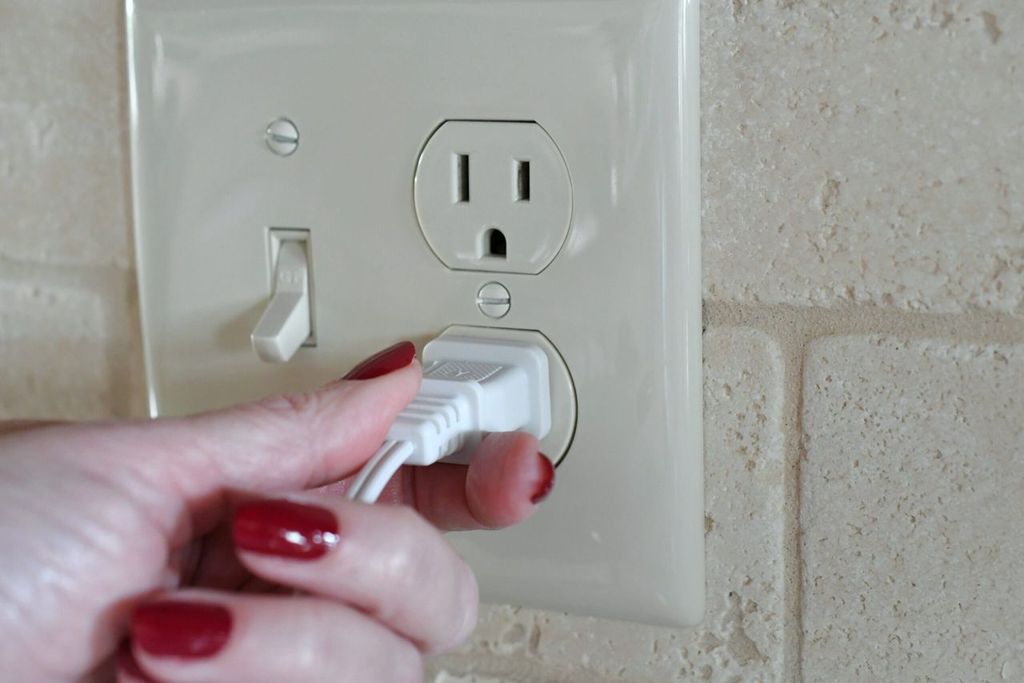
The National Electrical Code requires ground fault circuit interrupter protection for all outdoor receptacles at dwelling units, and that requirement exists specifically because the combination of water and electricity is lethal. A GFCI monitors the current leaving and returning on a circuit, and it opens in a fraction of a second when it detects an imbalance in the range of 4 to 6 milliamps. That threshold is far below the level that causes cardiac harm, which is what makes the device life saving rather than merely convenient. Older homes frequently have exterior receptacles that predate the requirement and offer no ground fault protection at all. Testing an outlet is simple, since a GFCI receptacle has test and reset buttons on its face, though protection can also come from a GFCI breaker in the panel. Before any lights go up, verify that every outdoor receptacle you plan to use is actually protected.
Protection alone is not enough, because the receptacle and cover also need to match the exposure. Outdoor receptacles in damp or wet locations must be weather resistant, marked WR on the face, and covered by an enclosure that keeps water out. In locations where a cord will remain plugged in, the code requires an in use cover, often called a bubble cover, that closes over the plug rather than around it. The older flip lid covers only protect an empty receptacle and offer nothing once a cord is inserted. Bubble covers are inexpensive, install in a few minutes, and dramatically reduce moisture related failures. Test each GFCI monthly during the season by pressing test and confirming the device opens, then pressing reset. Newer self test GFCI devices check their own internal circuitry automatically, but a manual test still confirms the mechanical function.
Nuisance tripping is the most common complaint about outdoor GFCI protection during the holidays, and it usually has a real cause. Every light string leaks a tiny amount of current to ground, and when you connect long runs of LED strings the cumulative leakage can approach the trip threshold on its own. Add moisture inside a connector and the total crosses the line. The correct response is to divide the display among multiple GFCI protected circuits, dry out and reseal wet connections, and lift connection points off the ground. Never replace a GFCI with a standard receptacle to stop the tripping, because that removes the protection that keeps a person alive when a fault occurs. A device that trips repeatedly with nothing plugged in has likely reached the end of its service life and should be replaced. Need GFCI protection added or replaced before the season? Click here for our GFCI outlet installation service.
Mounting and Routing Holiday Light Cords Without Damaging Them
How you attach lights to the house determines how long the wiring survives and how safe the installation remains. Plastic light clips designed for gutters, shingles, and siding hold strings securely without piercing anything, and they cost very little for a full season of use. Metal staples, nails, and screws driven through or beside a cord can penetrate the insulation and create a short circuit or a ground fault, sometimes months later after weather works the wire against the fastener. Damage of this kind often does not fail immediately, which is what makes it dangerous. Avoid stretching strings tightly between attachment points, since thermal contraction in cold weather adds tension and stresses the connections. Leave a small amount of slack at every corner and transition. Take a few extra minutes at the roofline, because that is where most cord damage originates.
Routing matters as much as mounting. Never run a cord through a closed door or window, because the frame will compress the insulation every time it shuts and the damage accumulates invisibly. Cords should not pass under rugs, doormats, or carpet, where heat cannot escape and foot traffic grinds the jacket down. Keep connection points elevated off the ground and out of puddles, using a stake, a hook, or a purpose built cord shield to hold plugs above grade. A simple drip loop, where the cord dips below the connection point before rising to the plug, sheds water away from the joint rather than letting it run into the receptacle. Waterproof cord connector covers are available for a few dollars and eliminate most midseason outages. In areas that will be plowed or shoveled, route cords well away from the work zone.
Ladder and clearance safety deserves a mention because the electrical hazard outdoors is not limited to the lights. The overhead service drop feeding your home carries full utility voltage and has no insulation you should ever rely on, so keep ladders, light strings, poles, and your own body well clear of it. Aluminum ladders should be avoided entirely near any overhead conductor. Work on dry surfaces, have someone foot the ladder, and never install lighting during wet or windy conditions. When the season ends, take the display down rather than leaving it up year round, since ultraviolet exposure and repeated freeze cycles degrade cords quickly. Coil cords loosely for storage instead of wrapping them tightly around a hand or a hook, and store everything in a dry container off the floor.
Why You Need a Professional Electrician for Holiday Lighting Circuits
There is a point where the answer to a holiday lighting problem stops being a longer cord and starts being additional capacity. Homes that were wired decades ago simply do not have enough exterior circuits to support a modern display alongside a garage, a workshop, and everything else that shares those breakers. Trying to work around that limitation with adapters and chained cords creates exactly the conditions that cause fires. A licensed electrician can evaluate your existing capacity, identify which circuits are already loaded, and add what the property actually needs. The work is usually straightforward, and doing it in early fall means the circuit is ready before the first cold snap. It also serves you the rest of the year for landscape lighting, outdoor tools, and seasonal equipment.
When a Tripping Breaker Means Your Holiday Lighting Circuit Needs an Electrician
A breaker that trips once when you plug in the last string is doing its job, and reducing the load usually resolves it. A breaker that trips repeatedly, trips with less load than it handled last year, or refuses to reset is communicating something different. Warm outlet faces, a burning smell, discolored receptacles, flickering that spreads to other rooms, and a buzzing panel are all signs that require immediate professional attention. None of those symptoms should be managed by moving cords around and hoping the pattern stops. Shutting the affected circuit off and calling an electrician is the correct response.
One thing that should never be done is replacing a tripping breaker with a larger one. The breaker is sized to protect the wire behind it, and a 20 amp breaker on 14 gauge wire allows that conductor to carry current beyond its rating without any device intervening. This is one of the most common and most dangerous do it yourself electrical mistakes in residential work. The overheating happens inside walls where nobody can see it, and the failure often shows up as a fire rather than an inconvenience. If a circuit genuinely needs more capacity, the wire, the breaker, and the receptacles all have to be evaluated together.
An electrician can also determine when the problem is a fault rather than an overload. Damaged insulation, a compromised connection, moisture inside a device box, and a failing receptacle all produce symptoms that resemble overloading but require entirely different repairs. Diagnostic testing identifies the actual cause quickly instead of leaving you guessing across a six week season. Homes with aluminum branch wiring, ungrounded receptacles, or original panels from the 1960s and 1970s deserve a full evaluation before any additional seasonal load is added. Finding those issues in September is far better than discovering them in December.
Adding a Dedicated Outdoor Circuit for Holiday Lighting
A dedicated 20 amp exterior circuit solves the holiday overload problem permanently and costs far less than most homeowners expect. The circuit runs from your panel to one or more weather resistant, GFCI protected receptacles placed where the display actually needs power, which eliminates the long cord runs across the yard. Placement is the part homeowners appreciate most, since receptacles can be located near the front walkway, at the corners of the house, or beside the area where inflatables sit. With 1,920 watts of usable capacity serving nothing but the display, the load calculation becomes simple and generous. The same circuit powers landscape lighting, pressure washers, and outdoor equipment the rest of the year.
Installation involves confirming that your existing panel has available space and adequate service capacity, running properly rated cable to the new locations, and installing weather resistant devices with in use covers. Homes with a full panel may need a subpanel or a service evaluation first, and that assessment is part of the visit. Everything gets installed to current National Electrical Code standards and to local permit requirements, which matters for insurance and for any future sale of the property. A switch or a timer can be built into the circuit so the display operates without anyone walking outside in the cold. Photocell control is another option that turns the lighting on at dusk automatically.
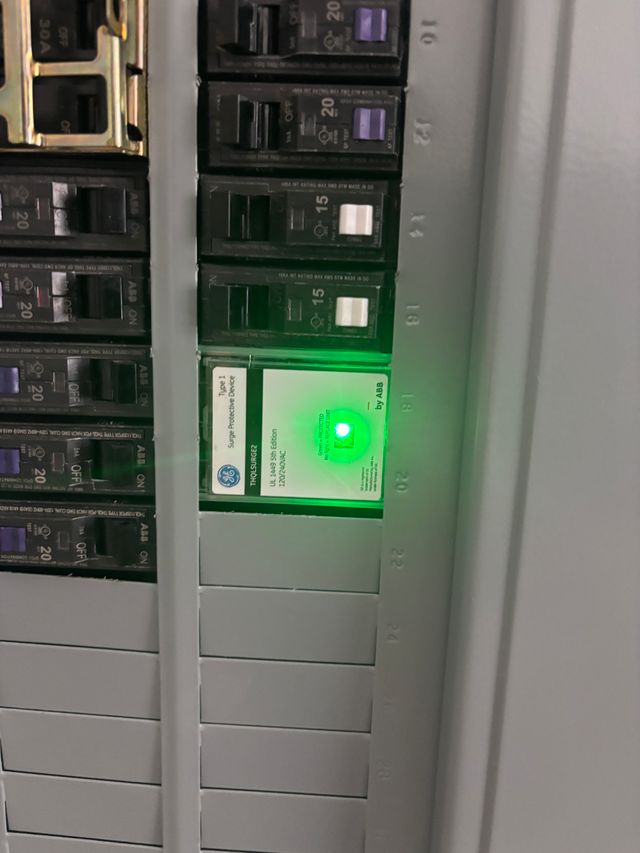
It is also worth considering surge protection while the panel is open, because holiday electronics, controllers, and LED drivers are sensitive to voltage transients. Winter storms, utility switching, and grid events all send surges into residential wiring, and a whole house device installed at the panel clamps those events before they reach your equipment. Combining a new exterior circuit with panel level surge protection is efficient, since both involve the same access and the same visit. The protection then serves your appliances, computers, and heating controls year round. Want to protect your electronics from winter storm surges? Click here for our whole house surge protection service.
Why Choose Edinson Electrical Solutions for Holiday Lighting and Outdoor Circuits
Edinson Electrical Solutions is a family owned and operated local business serving Hokendauqua, Whitehall, Allentown, Bethlehem, Easton, Emmaus, Nazareth, Macungie, Bath, and the surrounding Lehigh Valley communities. We are licensed and insured in the State of Pennsylvania, and every job we perform is code compliant work built for long term reliability. Our team treats a seasonal lighting circuit with the same care as a full service upgrade, because the wiring behind the wall stays there long after the decorations come down. We explain what we find, what it will cost, and what your options are before any work begins. That approach is why so much of our work comes from repeat customers and neighbor referrals.
Every job we complete carries a lifetime craftsmanship warranty, which reflects the standard we hold ourselves to on installations of every size. We are dedicated to providing a 5 star service every time, from the first phone call through the final walkthrough. Financing is available through Synchrony for larger projects such as panel upgrades, service upgrades, and full exterior circuit installations. We arrive on time, protect your property while we work, and clean up completely when we finish. Small courtesies matter, especially during a season when your home is full of guests.
Getting your exterior circuits evaluated before the holidays gives you a display that works reliably and wiring you do not have to think about. Reach us at (484) 898-7788 or by email at info@edinsonelectrical.com, and our office is located at 3049 Birch St, Hokendauqua, PA 18052. We handle GFCI installation, dedicated outdoor circuits, panel and service upgrades, surge protection, and emergency electrical service across the Lehigh Valley. If your breaker has been tripping every December for years, this is the season to fix it for good. Call us and we will get your home ready before the first string goes up.