
How to Prepare Your Home for a Portable Generator Installation
If you’ve lived through a Pennsylvania winter, you already know how unpredictable the power grid can be. Ice storms, heavy snow, summer thunderstorms, and the occasional fallen tree can knock out electricity in Allentown for hours or sometimes days at a time. For families with small children, elderly parents, medical equipment, or simply a refrigerator full of groceries they don’t want to lose, sitting through an extended outage in the dark isn’t a realistic option. That’s why portable generators have become one of the most popular home preparedness investments across the Lehigh Valley.
A portable generator can keep your essentials running until the power comes back, but only if your home is properly set up to use it safely. Plugging extension cords through windows or, worse, trying to backfeed power through a dryer outlet creates serious risks for your family, your home, and even the utility workers trying to restore service. The right way to use a portable generator involves a permanent installation that lets the unit safely power selected circuits in your home through a transfer switch. At Edinson Electrical, we install these systems for homeowners across Allentown and the Lehigh Valley, and we want to walk you through what proper preparation actually looks like.
Why Portable Generators Matter for Allentown, PA Homes
Pennsylvania’s weather doesn’t make life easy for the power grid. Heavy snow weighs down branches that take out overhead lines. Ice storms snap utility poles and bring down entire sections of wire. Summer storms produce high winds and lightning strikes that damage transformers and substations. Even routine maintenance outages can leave you without power at the most inconvenient times.
For Allentown homeowners, the question isn’t whether you’ll lose power at some point, but when, and for how long. A portable generator gives you the ability to keep your refrigerator and freezer running, maintain heat in the winter, charge phones and medical devices, run sump pumps to prevent basement flooding, and generally keep your household functioning until the grid comes back online. Compared to a permanently installed standby generator, a portable unit costs significantly less, takes up less space, and gives you flexibility to use it for other purposes like camping, job sites, or outdoor events. The catch is that you need the right electrical infrastructure in place to use it safely, which is where proper installation preparation comes in.
Portable vs Standby Generators: Understanding the Difference
Before getting into installation prep, it helps to understand exactly what kind of generator we’re talking about. A portable generator is a movable unit, typically powered by gasoline, propane, or a dual-fuel design, that you wheel out, fuel up, and start manually when the power goes out. They typically range from 3,000 to 12,000 watts and can power selected circuits or appliances rather than your entire home.

A standby generator, by contrast, is a permanently installed unit (similar to an outdoor AC condenser) that runs on natural gas or large propane tanks, kicks on automatically when the power goes out, and can typically power your whole home. Standby generators are convenient and powerful, but they cost several times more than a portable setup and require significantly more installation work.
For most Allentown families, a portable generator paired with a properly installed transfer switch hits the sweet spot of cost, convenience, and capability. You spend a fraction of what a standby system would cost, you get reliable backup power for the circuits that matter most, and you maintain the flexibility to use the generator for other things when you don’t need it for home backup. The installation prep we’ll cover here is specifically focused on this kind of setup.
Why You Need a Proper Transfer Switch Installation
The single most important piece of a portable generator installation is the transfer switch. A transfer switch is a device that safely connects your generator to selected circuits in your home’s electrical panel, allowing the generator to power those circuits without any risk of feeding electricity back into the utility grid.
Backfeeding, which happens when generator power flows backward through your home wiring and out to the utility lines, is one of the most dangerous mistakes a homeowner can make. It can electrocute utility workers trying to restore service, damage your generator and home electronics when grid power is restored, and start fires if the wiring isn’t sized to handle the load. Some homeowners try to shortcut around proper installation by using “suicide cords” that plug into a dryer outlet on both ends, but this practice is both illegal and extremely dangerous.
A properly installed manual transfer switch eliminates these risks entirely. When you switch to generator power, the transfer switch physically disconnects your home from the utility grid before allowing generator power to flow through your circuits. The two power sources are never connected at the same time, which protects everyone and keeps your installation in compliance with electrical code.
Step 1: Assess Your Power Needs and Choose the Right Generator
The first step in preparing your home for a portable generator installation is figuring out how much power you actually need. Start by listing the circuits and appliances you want to keep running during an outage. For most households in Allentown, that list includes the refrigerator, freezer, furnace blower, sump pump, a few lights in key rooms, the kitchen microwave, and outlets for charging phones and laptops. Some homeowners also want to include a window air conditioner or space heater for one or two rooms, a well pump if the home isn’t on municipal water, and a garage door opener.
Add up the running wattage of each item, then factor in the higher startup surge that motors require when they first turn on. A qualified electrician can walk you through this calculation and recommend an appropriately sized generator. Generally speaking, a 5,000 to 7,500 watt portable generator handles the essentials for most homes, while families with larger needs may want to step up to 10,000 watts or more. Choosing the right generator size matters because an undersized unit will trip its own breakers under load, while an oversized one wastes fuel and money for no real benefit.
Step 2: Plan the Transfer Switch Location
The transfer switch needs to be installed near your main electrical panel, ideally within a few feet of it, since the two devices need to be wired together. Most installations place the transfer switch directly next to the existing panel on the same wall, where it’s easy to access and operate during an outage.
Take a look at your panel area and think about whether there’s enough clear space for an additional component. The transfer switch itself is roughly the size of a small breaker panel, and you’ll need open wall space, adequate clearance in front of it for operation, and reasonable access to run wiring between it and your main panel. If your panel is crammed into a tight closet or behind furniture, you may need to clear the area before installation can begin. Your electrician will confirm the right location based on your home’s specific layout, but doing a preliminary walk-through helps you understand what to expect.
Step 3: Decide Which Circuits to Back Up
Portable generator transfer switches typically support six to ten circuits, depending on the model. You’ll need to decide which circuits in your home get connected to the transfer switch and powered by the generator during an outage. This is where the prioritizing you did in Step 1 pays off.
The most common circuits to back up include the refrigerator and freezer, the furnace, a sump pump if you have one, key lighting circuits, a few outlets in the kitchen and family room, and the garage door opener. If you work from home, you may want to include your home office circuit. If you have a well pump, that’s typically a high priority. Avoid trying to back up high-draw appliances like central air conditioners, electric ranges, electric water heaters, or electric dryers unless you have a substantially larger generator, since these can quickly overwhelm a portable unit. Your electrician can help you make these decisions based on the size of generator you’ve chosen and the realistic loads each circuit carries.
Step 4: Choose a Safe Location for the Generator
Where you actually park and run the generator during an outage is just as important as how it’s wired into your home. Generators produce carbon monoxide as a byproduct of combustion, and CO poisoning from improperly placed generators kills people in Pennsylvania every year, often during the very storms when families need backup power most.
Plan to position your generator at least 20 feet away from your home, with the exhaust pointed away from windows, doors, and vents. Never run a generator inside a garage, even with the door open, and never operate one in a basement, shed, or any enclosed or partially enclosed space. The location should be on a level surface, protected from rain and snow but with adequate ventilation on all sides. Many homeowners build a small generator shelter (sometimes called a generator tent or canopy) that protects the unit from precipitation while keeping it fully ventilated.
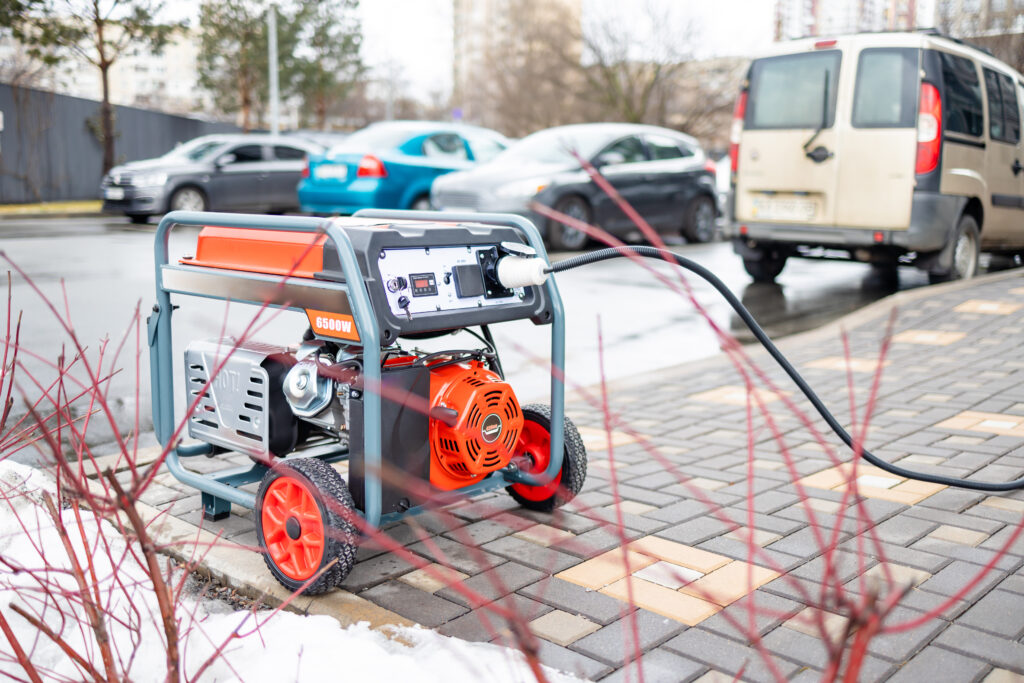
Think about how you’ll get power from the generator to your home’s inlet box. The cord that runs between them needs to be heavy-duty, rated for outdoor use, and long enough to reach the generator location without running through windows or under doors. Plan the path during good weather, before you need to set it up in the middle of a storm.
Step 5: Plan Fuel Storage Safely
A portable generator is only as useful as the fuel you have on hand. During an extended outage, gas stations may be closed, out of fuel, or only able to pump if they have backup power themselves. Having enough fuel stored safely at home means the difference between riding out a multi-day outage and scrambling at the worst possible time.
Most gasoline generators use between half a gallon and a full gallon of fuel per hour at moderate load. For a full weekend outage, you may go through 20 to 40 gallons of fuel. Store gasoline in approved, properly labeled containers, in a well-ventilated location away from any source of ignition, ideally in a detached shed or garage rather than inside the home. Add fuel stabilizer to extend shelf life, and rotate your supply periodically to keep it fresh. If your generator is dual-fuel capable, propane is another option that stores longer than gasoline and doesn’t degrade over time, though you’ll need to plan for the size and weight of the tanks involved.
Step 6: Address Carbon Monoxide Safety
Beyond proper generator placement, your home should have working carbon monoxide detectors on every level and near any sleeping areas. Test them when you set up your generator system, replace batteries if needed, and consider upgrading older detectors that may be past their useful life. CO is colorless and odorless, and a working detector is the only reliable way to know if dangerous levels are present in your home.
Walk through your home and identify any windows, doors, dryer vents, attic vents, or air intakes that could draw exhaust into the house if the generator were placed nearby. These locations should be off-limits for generator placement, even when 20 feet away or more. Take the time to mark a clear, safe location for the generator before you ever need to use it, so there’s no guessing in the middle of an emergency.
Step 7: Permits and Code Compliance
Installing a transfer switch and inlet for a portable generator is electrical work that requires permits and inspections in most Pennsylvania municipalities, including Allentown. Your licensed electrician will pull the necessary permits, perform the installation to current National Electrical Code standards, and schedule a final inspection with the local code enforcement authority.
Permits exist for good reasons. They ensure that the work is done safely, that the materials used are appropriate for the application, and that the final installation will perform reliably for decades. They also protect you in the event of an insurance claim or home sale, since unpermitted electrical work can create real problems down the road. A reputable electrician handles the permit process as a standard part of the installation, and you should be cautious of anyone who suggests skipping it to save time or money.
Common Mistakes to Avoid
The biggest mistakes homeowners make with portable generators happen during high-stress moments when an outage is already underway. Trying to install or modify electrical equipment yourself, running extension cords through partially closed windows, placing the generator too close to the home, or skipping the carbon monoxide detector check are all serious errors that lead to injuries, property damage, or worse every year.

Plan your installation well before you actually need it. Run a test once everything is in place, walk through the startup sequence, label the transfer switch clearly so anyone in the household can operate it, and store the generator cord, fuel, and any accessories in an organized, accessible location. The work of preparing for an outage is most valuable when it’s done in calm weather, with time to think and ask questions, rather than at midnight during a blizzard.
A portable generator can transform how your family handles power outages, but only when it’s installed correctly and used safely. At Edinson Electrical, we’ve helped homeowners throughout Allentown and the Lehigh Valley prepare their homes for reliable backup power, with proper transfer switches, code-compliant installations, and clear guidance every step of the way. We handle the permits, we coordinate with your local utility if needed, and we leave you with a system that’s ready to perform whenever the next storm rolls through.
Our licensed electricians will evaluate your home, recommend the right transfer switch and generator size for your needs, and complete the installation to the highest standards of safety and craftsmanship. We’ll walk you through how to operate the system, answer any questions you have, and make sure you feel confident using your new setup before we leave the job site.
Don’t wait until the next ice storm or summer thunderstorm to start thinking about backup power. Contact Edinson Electrical today to schedule a generator installation consultation. We’ll help you build the safe, reliable, properly installed setup your home deserves, so the next time the lights go out, you’re ready.