
How to Add Outdoor Outlets for Patios and Decks Before Summer Ends
Summer is the season for grilling, string lights, outdoor speakers, and patio fans, yet many homeowners discover too late that their backyard has nowhere to plug anything in. Adding outdoor outlets to your patio or deck gives you safe, convenient power right where you spend your warm evenings, and the back half of the season is the ideal window to get the work scheduled. The job involves more than simply mounting a receptacle on an exterior wall; outdoor power must follow specific electrical codes that protect you from shock, moisture, and overloaded circuits. A correctly installed outdoor outlet uses weather resistant components, ground fault protection, and proper wire routing that holds up against rain, humidity, and temperature swings. Doing it right the first time keeps your family safe and prevents tripped breakers, corroded contacts, and fire risk down the road. Edinson Electrical Solutions installs code compliant outdoor receptacles across the Lehigh Valley, and this guide walks you through what the project involves before the warm weather slips away. Read on to learn the location rules, the protection requirements, the installation process, and the reasons to handle it before summer closes out.
What You Need to Know About Adding Outdoor Outlets for Patios and Decks
Before any wire gets run, it helps to understand the basics that govern every outdoor outlet installation on a patio or deck. Outdoor receptacles live in a harsh environment, so the National Electrical Code treats them differently from the outlets inside your living room. Every exterior receptacle must be protected against ground faults, sealed against weather, and placed at a height and location that makes sense for real use. The circuit feeding the outlet also matters, because plugging a high draw appliance into an undersized line is a fast path to nuisance trips and overheating. Planning ahead means thinking about where you actually want power, how many devices you intend to run, and what the surface of your home or deck is made of. Brick, vinyl siding, stucco, and composite decking each call for slightly different mounting and sealing methods. When these details are handled correctly, you end up with outlets that look clean, work reliably, and pass inspection without trouble.
Choosing the Right Location for Outdoor Outlets on Patios and Decks
Picking the location for your outdoor outlets sets the tone for the entire project, and the best spots balance convenience with code requirements. Most homeowners want power near the grill, beside seating areas, along deck railings, and close to where holiday and string lights will hang. The code requires at least one accessible exterior receptacle at the front and back of a dwelling, mounted no higher than six feet six inches above grade, so any patio addition should build on that baseline rather than ignore it. You also want to keep receptacles away from areas that collect standing water, such as the low point of a sloped patio or a spot directly under a roof drip line. Think about the cords you will run, because an outlet placed too far from your seating means extension cords stretched across walkways, which creates trip hazards and defeats the purpose of the upgrade. A walk around your yard at the time of day you actually use it often reveals the smartest placements. Mapping these spots before installation lets your electrician design a single clean circuit instead of patching outlets in later.
The surface where the outlet mounts changes how the installation proceeds, and this is something many do it yourself attempts get wrong. Mounting into brick or stucco requires masonry anchors and careful sealing so water cannot wick behind the box, while vinyl siding needs a proper mounting block to keep the box flush and watertight. On a deck, outlets often attach to posts, railings, or a freestanding pedestal rather than the house itself, which means the wire has to travel safely from the home to that point. Composite and wood decking both expand and contract with heat, so the mounting hardware must allow for that movement without cracking the seal. Your electrician will also confirm that the chosen surface has solid backing behind it, since a wobbly box pulls on the wiring connections over time. Getting the mounting right protects the electrical connections inside from the moisture that eventually destroys a poorly sealed outlet.
Distance from water features, hot tubs, and pools adds another layer to location planning that homeowners frequently overlook. The code sets specific clearances for receptacles near pools and spas, and placing an outlet too close can put your project out of compliance and your family at risk. If your patio sits near a pool or you plan to add a hot tub, those clearances need to factor into the outlet layout from the start. Drainage patterns matter too, because an outlet at the bottom of a slope will sit in puddles every time it rains, no matter how well it is sealed. The smartest layouts keep receptacles slightly elevated, shielded from direct splash, and positioned where you genuinely need them rather than wherever the wiring happens to be easy. If your plans involve pool or spa power, our hot tub wiring service can handle those specialized connections safely. Thinking through every one of these factors up front saves money and prevents rework once the inspector arrives.
GFCI Protection Requirements for Outdoor Outlets on Patios and Decks
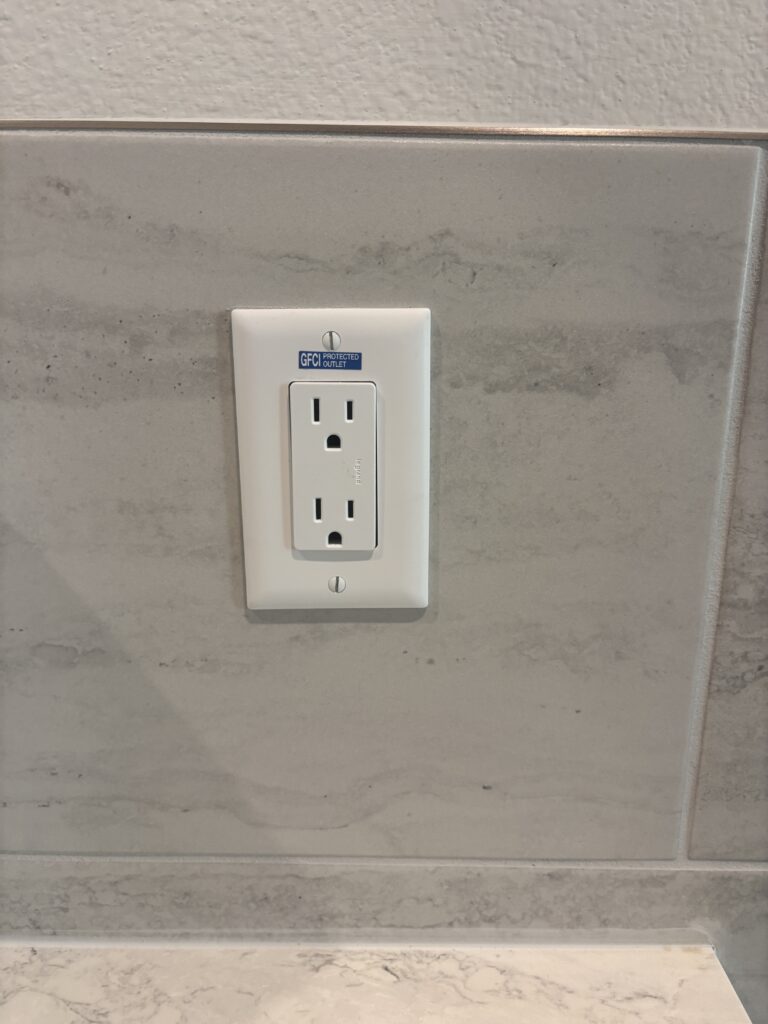
Ground fault protection is the single most important safety feature on any outdoor outlet, and the code makes it mandatory for every receptacle exposed to the elements. A ground fault circuit interrupter, commonly called a GFCI, monitors the flow of electricity and shuts off power in a fraction of a second when it detects current leaking to ground. Outdoors, where moisture, bare feet, wet tools, and metal furniture all increase shock risk, this protection can be the difference between a harmless event and a fatal one. The protection can come from a GFCI receptacle installed at the outlet itself or from a GFCI breaker in your electrical panel that covers the whole circuit. Both approaches satisfy code when installed correctly, though the right choice depends on your panel, your circuit layout, and how many outlets share the line. A licensed electrician will confirm that every outdoor receptacle on your patio or deck has working ground fault protection, because a missing or faulty GFCI is one of the most common failures found during inspections. This is not an area to cut corners, since the protection exists specifically to keep people alive.
Many homeowners assume an old outdoor outlet is fine simply because it still delivers power, but an outlet without functioning GFCI protection is a serious hazard. Older homes across Whitehall, Bethlehem, and Allentown often have exterior receptacles that predate modern code, and those outlets offer no shutoff when a fault occurs. Even a newer GFCI can wear out, because the internal sensing components degrade over years of sun, heat, and moisture exposure. Testing a GFCI is simple and should happen monthly using the test and reset buttons, yet most people never do it. If your outdoor outlet does not trip when you press test, the protection is gone and the device needs replacement right away. Upgrading aging outlets to proper ground fault protection is often part of a larger outdoor outlet project, and it brings the rest of your exterior power up to current safety standards. A professional can verify and replace these devices quickly during a single visit.
The placement of GFCI protection also affects how convenient your outlets are to reset after a trip. If you install a single GFCI receptacle and wire the rest of the outlets downstream from it, one trip can cut power to several outlets at once, which is annoying when only one device caused the fault. A GFCI breaker in the panel offers similar coverage but requires walking inside to reset, which is inconvenient for a backyard outlet. Many electricians solve this by installing individual GFCI receptacles at key locations so that a trip in one spot does not kill the rest of your patio power. The right configuration depends on how you use the space and how the circuit is laid out. For a clean and code compliant setup, our GFCI outlet installation service covers everything from a single outlet to a full exterior upgrade. Getting this protection designed correctly from the start means fewer headaches and far better safety every time you step outside.
Weatherproof Covers That Keep Outdoor Outlets Safe on Patios and Decks
A weatherproof cover is the physical shield that keeps rain, snow, and humidity out of the live connections inside your outdoor outlet. The code requires that outlets in wet locations use what is known as an in use cover, a hinged bubble style enclosure that stays sealed even while a cord is plugged in. This differs from older flip lid covers, which only protect the outlet when nothing is plugged in and leave the connection exposed the moment you run a cord through them. Since patio and deck outlets often power devices for hours at a time, the in use cover is the only style that truly protects against weather during real world use. These covers come in shallow and deep profiles, and the deep version accommodates bulky plugs and timers without forcing the lid open. A properly rated cover, paired with a weather resistant receptacle marked WR, forms a system designed to survive years of outdoor exposure. Skipping this hardware to save a few dollars invites water into the box and eventually causes corrosion or a short.
The seal between the cover, the box, and the mounting surface matters just as much as the cover itself, because water finds the smallest gap. A quality installation uses a gasket behind the cover plate and the correct sealant where the box meets brick, siding, or decking. Boxes intended for outdoor use carry a rating for wet or damp locations, and using an indoor box outside is a common mistake that leads to early failure. The wire entry points into the box also need sealing, since water can travel along a cable just as easily as it pools on a surface. On decks, where wind drives rain sideways, the orientation of the cover and the angle of the box can make a real difference in how well water sheds away. An experienced electrician selects the right box, gasket, and sealant combination for each specific mounting situation. This attention to detail is what separates an outlet that lasts a decade from one that fails after a single wet winter.
Maintenance keeps weatherproof outlets working long after installation, and a few simple habits extend their life considerably. Inspect the covers each spring and fall for cracks, since ultraviolet light slowly makes plastic brittle and a cracked lid no longer seals. Check that the hinge and gasket still close tightly, and replace any cover that no longer snaps shut firmly. Clear debris, leaves, and spiderwebs from inside the cover, because accumulated grime can hold moisture against the receptacle. If you notice rust, discoloration, or a burning smell at any outdoor outlet, stop using it and have it inspected, since those signs point to water intrusion or a failing connection. Keeping cords in good shape also protects the system, because a damaged cord can introduce faults that stress the outlet. For repairs to existing exterior outlets, our electrical repair service handles weather damaged receptacles and covers throughout the area. A little routine attention preserves both the safety and the appearance of your outdoor power.
How the Process of Installing Outdoor Outlets for Patios and Decks Works
Installing outdoor outlets for a patio or deck follows a clear sequence that starts long before any receptacle gets mounted. A licensed electrician first evaluates your existing electrical panel to confirm it has the capacity and an available breaker slot for a new circuit. From there, the route for the wire is planned, the points where it passes through walls or travels underground are mapped, and the materials rated for outdoor use are gathered. The actual work includes running the cable, mounting weatherproof boxes, installing weather resistant receptacles, adding ground fault protection, and sealing everything against the elements. Local permits and a final inspection usually round out the project, since municipalities want exterior electrical work verified for safety. While the steps sound straightforward, each one carries code requirements and safety considerations that demand real expertise. Understanding the process helps you appreciate why professional installation protects your home far better than a weekend attempt.
Planning the Circuit for New Outdoor Outlets on Patios and Decks
Planning the circuit is where a good outdoor outlet project succeeds or fails, because everything downstream depends on a properly sized and protected supply. The electrician begins by adding up the expected load, since a patio that powers a few string lights needs far less than one running a refrigerator, a fan, and a sound system at once. That load total determines the wire gauge and the breaker size, and undersizing either one leads to tripped breakers or dangerous overheating. The panel itself gets checked for available capacity, because adding a new circuit to a panel already at its limit can require a service upgrade first. A dedicated circuit for outdoor outlets is often the smartest choice, since it keeps backyard devices from competing with indoor appliances on the same line. The electrician also decides how many outlets the circuit can safely support based on anticipated use. This careful math at the start prevents the frustration of outlets that constantly cut out during a gathering.
The condition and age of your existing electrical system play a large role in how the circuit gets designed. Homes in older neighborhoods around Easton, Nazareth, and Emmaus sometimes have panels that are full, outdated, or no longer manufactured, which limits how new circuits can be added. If your panel cannot accommodate another breaker, the electrician will discuss options that range from a subpanel to a full panel upgrade. Aluminum wiring, knob and tube remnants, and previous amateur work can all complicate the plan and need to be addressed for safety. A thorough evaluation up front avoids surprises midway through the job and keeps the entire system code compliant. The goal is a clean addition that integrates with your existing electrical service rather than overloading it. When the panel needs attention, our electrical panel installation service provides the capacity your new outdoor circuit requires.
Mapping the physical route for the wire is the final piece of the planning stage, and it shapes how the rest of the installation unfolds. The electrician decides where the cable will exit the home, how it will travel to each outlet, and how it will be protected along the way. Indoor runs through walls and joists differ greatly from runs that cross open deck framing or pass underground to a freestanding outlet. Each transition point, such as where the wire leaves the house or enters a deck post, requires the correct fitting and seal to stay code compliant. The route also accounts for future maintenance, so connections remain accessible rather than buried where they cannot be serviced. A well planned route minimizes the wire used, reduces the number of holes drilled, and keeps the finished work tidy. This planning turns a potentially messy job into a clean and reliable installation.

Running Wire Safely for Outdoor Outlets on Patios and Decks
Running the wire safely is the heart of the installation, and it follows strict rules that protect both the wiring and the people near it. Cable that travels outdoors or underground must be rated for those conditions, since standard indoor cable degrades quickly when exposed to moisture and sunlight. Underground feeder cable, often called UF, is designed for direct burial, while other runs use conduit to shield the conductors from physical damage. The depth at which wire gets buried is governed by code, with direct burial cable typically placed deeper than wire run inside rigid conduit. These depths exist so that garden tools, foot traffic, and settling soil do not damage the line over time. Where the wire rises out of the ground to reach an outlet, it must be protected by conduit so the exposed section cannot be struck or worn. Following these rules keeps the circuit safe for the decades it will likely remain in service.
Penetrations through the home and across deck framing demand careful technique to maintain both electrical and structural safety. Every hole drilled through an exterior wall must be sealed to keep out water and pests, and the wire passing through it needs protection from sharp edges. When wire runs through deck joists or posts, it has to follow rules about distance from the edge so screws and nails cannot pierce it later. Securing the cable at proper intervals prevents sag and strain that would otherwise loosen connections over time. The electrician also keeps the wiring clear of heat sources, sharp metal, and areas prone to moisture buildup. On decks especially, the wire must be routed where it stays hidden, protected, and out of the way of foot traffic. This combination of code knowledge and craftsmanship is exactly what a trained professional brings to the job.
Connections are where most outdoor wiring problems eventually appear, so they receive the closest attention during a quality installation. Every splice and termination happens inside an approved box, never out in the open where weather can reach it. The conductors get connected with the correct wire connectors, torqued to the proper tightness so they neither loosen nor overheat. Grounding is verified at every point, since a solid ground path is what makes the GFCI protection function correctly. Loose or corroded connections generate heat, and over time that heat can melt insulation or start a fire, which is why precision matters so much here. The electrician tests every outlet for correct polarity, proper grounding, and working ground fault protection before the job is called complete. For the wiring portion of any outdoor project, our electrical wiring service delivers connections built to last through every season.
Permits and Inspections for Outdoor Outlets on Patios and Decks
Permits and inspections protect homeowners by ensuring that outdoor electrical work meets the safety standards written into local code. Most municipalities in Pennsylvania require a permit for adding new circuits or receptacles, and skipping that step can create problems when you sell your home or file an insurance claim. The permit process documents that the work was done legally and gives an inspector the chance to verify that everything is safe. A licensed electrician handles the permit application, schedules the inspection, and makes sure the installation will pass before the inspector arrives. This professional involvement removes the guesswork and the stress that come with navigating municipal requirements on your own. Permitted work also gives you peace of mind that your outdoor outlets were installed correctly. The small amount of time a permit adds is well worth the protection it provides.
The inspection itself checks the specific details that make outdoor power safe, and it covers far more than a casual glance. The inspector confirms that every receptacle has working ground fault protection, that weather resistant devices and in use covers are installed, and that the wiring is the correct type and gauge. They verify burial depths, conduit protection, box ratings, and the integrity of every connection point. Grounding receives particular scrutiny, since a faulty ground undermines the entire safety system. The inspector also confirms that the circuit is properly sized and that the panel connection was made correctly. Work that fails inspection has to be corrected and reinspected, which is exactly why having a licensed professional do it right the first time saves time and money. A clean pass means your outdoor outlets are genuinely safe for your family to use.
Code compliant work carries value that extends well beyond the day of installation. When you eventually sell your home, documented and permitted electrical upgrades reassure buyers and inspectors that the property is safe. Insurance companies also look more favorably on work that was permitted and inspected, since unpermitted electrical work can complicate or even void a claim after an incident. Beyond those practical benefits, code compliance simply means the work was done to a standard proven to keep people safe. An outdoor outlet that meets every requirement gives you confidence every time you plug in a tool, a light, or an appliance. If your project also reveals existing code issues, our electrical inspection service can evaluate your whole system. Doing the job correctly from the start is always cheaper than fixing shortcuts later.
Why You Should Add Outdoor Outlets Before Summer Ends
Adding outdoor outlets before summer ends lets you enjoy the rest of the warm season with power exactly where you want it. The late summer and early fall weeks are a smart time to schedule the work, since the weather is stable and you can still use the new outlets for evening gatherings, lighting, and entertainment. Booking now also positions you ahead of the fall rush, when homeowners scramble to prepare their properties for holiday lighting and cooler weather. A patio or deck with proper power is more functional, safer, and more valuable than one relying on extension cords stretched from inside the house. Edinson Electrical Solutions can design and install a clean, code compliant outdoor outlet setup that serves you for years. Getting it handled before the season closes means you reap the benefits right away.
The Convenience of Outdoor Outlets Before Summer Ends
Convenient outdoor power transforms how you use your backyard, and the difference becomes obvious the first evening you flip on string lights without running a cord through a window. With outlets placed where you actually need them, you can power a grill light, charge phones, run a fan on a hot night, and play music without juggling extension cords. Those cords are not just inconvenient; they snake across walkways, create trip hazards, and often cannot handle the load you place on them. Dedicated outdoor outlets remove that hassle entirely and let your patio function as a true extension of your living space. The convenience pays off every single time you step outside to relax or entertain. Adding this power before summer ends means you enjoy it during the best remaining weeks of the season.
The flexibility that outdoor outlets provide also makes your space ready for whatever you want to do next. You might add a water feature, a heated seating area for cooler nights, or decorative lighting that extends your evenings well into fall. Having power already in place means those additions become simple rather than requiring another electrical project each time. Outdoor outlets also support seasonal needs, from summer fans to autumn lighting to holiday displays later in the year. This kind of forward planning saves you from repeatedly hiring help for small power needs. A well designed setup anticipates your future use and leaves room to grow.
Outdoor power also raises the everyday usefulness of your home in ways that family members notice constantly. Kids can charge devices outside, you can run a pressure washer or power tools during yard projects, and hosting becomes far easier when guests have somewhere to plug in. The backyard stops being a place you avoid for certain activities and becomes fully usable for all of them. Pairing outlets with good lighting multiplies that benefit, since a well lit and powered patio invites use after dark. To brighten the space alongside your new outlets, our outdoor lighting installation service creates the perfect evening atmosphere. The combination of light and power turns an underused yard into a favorite gathering spot.

The Safety Benefits of Professional Outdoor Outlet Installation Before Summer Ends
Professional installation delivers safety that a do it yourself approach simply cannot match, and outdoor power is one area where mistakes carry serious consequences. Water and electricity are a dangerous combination, and an improperly installed outdoor outlet can expose your family to shock or your home to fire. A licensed electrician understands the ground fault protection, weatherproofing, and grounding requirements that keep an outdoor circuit safe in every condition. Those safeguards are not optional extras; they are the difference between a reliable outlet and a genuine hazard. Having the work done before summer ends means the protection is in place while you are still actively using the space. Safety done right gives you confidence every time you reach for an outdoor outlet.
Relying on extension cords as a substitute for proper outlets introduces risks that build up quietly over time. Cords run across the ground get pinched, cracked, and frayed, and a damaged cord near moisture is a shock and fire risk. Overloading a single indoor outlet by daisy chaining cords outside strains the circuit and can overheat the wiring inside your walls. These hazards often go unnoticed until something fails, sometimes dramatically. Proper outdoor outlets on a correctly sized circuit eliminate the temptation to overload and remove the cord hazards entirely. Investing in the right installation protects both the people who use the space and the home itself.
A professional installation also protects you from the costly mistakes that amateur electrical work commonly produces. Incorrect wire size, missing ground fault protection, improper burial depth, and unsealed boxes all lead to failures that are expensive to fix later. Worse, faulty work can cause damage that insurance may not cover if the installation was never permitted. A licensed electrician stands behind the work, follows code, and ensures the result is safe and durable. That accountability is worth far more than the apparent savings of a weekend project gone wrong. Bringing in a professional before summer ends means the job is done safely while you can still enjoy the results.
Why Choose Edinson Electrical Solutions for Outdoor Outlet Installation
Edinson Electrical Solutions is a family owned and operated local business that treats every outdoor outlet installation as a chance to earn your trust. We are licensed and insured in the State of Pennsylvania, and we hold every job to the code compliant standards that keep your family safe. Our team serves communities across the Lehigh Valley, including Whitehall, Bethlehem, Allentown, Easton, and Nazareth, with the same care we would give our own homes. We focus on craftsmanship that lasts, which is why we back every job with a lifetime craftsmanship warranty. When you call us, you reach a dedicated local team rather than a faceless chain. That commitment shows in the quality of every outlet we install.
We believe in doing the work right the first time, and our reputation rests on the five star service we deliver on every visit. Our electricians take the time to plan your circuit, run the wire safely, and seal every connection against the weather. We explain the process clearly so you understand exactly what we are doing and why it keeps you safe. Financing is available through Synchrony, which makes it easier to complete your outdoor power project without straining your budget. We handle permits and inspections so you never have to navigate the paperwork yourself. From the first call to the final test, we make the experience straightforward and reassuring.
Choosing Edinson Electrical Solutions means choosing a partner who cares about long term reliability rather than a quick patch. We use weather resistant components, proper ground fault protection, and durable materials built to survive Pennsylvania seasons. Our work is designed to serve your patio or deck for many years with minimal maintenance. If you want safe and convenient outdoor power before summer ends, our team is ready to help. Call us at (484) 898-7788 or email info@edinsonelectrical.com to schedule your outdoor outlet installation today. Let us help you make the most of your backyard while the warm weather lasts.