
Why You Should Schedule an Electrical Inspection Before Daylight Saving Ends
Daylight saving time ends on the first Sunday in November, and the shift affects your home far more than most people expect. Sunset across the Lehigh Valley drops to just past four thirty in the afternoon, which means interior lights, exterior fixtures, space heaters, and holiday decorations all begin running earlier in the day and staying on far longer into the evening. That added demand lands directly on wiring, breakers, receptacles, and connections that spent the entire summer doing very little work at all. Problems that stayed quiet through warm weather tend to reveal themselves quickly once the electrical load climbs, and they rarely reveal themselves at a convenient hour. An electrical inspection performed before the time change gives you an accurate picture of what your system can safely carry and which repairs deserve priority. It also leaves you enough runway to complete that work before the holiday season arrives, when calendars fill up and a failed circuit becomes far more than a minor annoyance. Edinson Electrical Solutions inspects homes throughout Whitehall, Allentown, Bethlehem, Easton, and the surrounding Lehigh Valley every autumn for precisely this reason, because the households that plan ahead in September and October almost never end up calling in a panic in December.
What an Electrical Inspection Covers Before Daylight Saving Time Ends
An electrical inspection is a structured review of every part of your home that carries, controls, or protects electrical current. A licensed electrician evaluates the service entrance, the main panel and any subpanels, the breakers, the grounding and bonding system, the branch circuits, the receptacles and switches, and the permanently installed fixtures throughout the house. The purpose is to locate loose terminations, overloaded circuits, damaged insulation, improper modifications, and missing protective devices well before any of those conditions produce heat, arcing, or a total loss of power. Autumn is the ideal window for this work because the load profile of a typical home changes dramatically the moment the sun starts setting before dinner. Lighting circuits run four to five additional hours every single day, portable heating equipment comes out of storage, and kitchens work considerably harder through November and December. An inspection completed early in the season leaves comfortable room to schedule any resulting repairs on your terms rather than on an emergency basis.
The Electrical Panel Inspection You Need Before Daylight Saving Ends
Your electrical panel is the single most important component reviewed during an electrical inspection, because every circuit in the house depends on it functioning correctly under load. A thorough panel inspection begins with verifying the service rating, since a 100 amp service that was perfectly adequate in 1978 often struggles to support a modern household running electric heat, a heat pump, an EV charger, and a full holiday lighting display at the same time. The electrician then removes the dead front cover to examine conductor terminations, checking for discoloration, oxidation, corrosion, melted insulation, and evidence of past overheating around the lugs and breaker screws. Loose connections are one of the most common findings in older panels, and they matter enormously because a loose termination creates resistance, resistance creates heat, and heat eventually degrades the conductor and the device holding it. The National Electrical Code requires that terminations be tightened to the manufacturer specified torque value using a calibrated torque tool, which is a step that many older installations and most amateur repairs skipped entirely. Circuit directories get verified and corrected as well, since an accurate panel schedule saves critical time during an emergency. All of this happens with the power addressed safely and methodically, and none of it is work a homeowner should attempt without training.
Obsolete and failure prone panels come up more often in Lehigh Valley homes than many owners realize, and identifying one is among the most valuable outcomes of a fall electrical inspection. Federal Pacific Electric panels, Zinsco panels, and Challenger panels all carry documented histories of breakers that fail to trip reliably under overload or short circuit conditions, which defeats the entire purpose of having overcurrent protection in the first place. Older fuse boxes present a related problem, since fuses are frequently replaced with oversized ratings that allow a circuit to draw far more current than the wire behind the wall was ever designed to carry. Some homes also contain panels that were never properly bonded, panels missing knockout covers or filler plates, and panels that have been quietly modified over decades by well meaning family members. Double tapped breakers, where two conductors share a terminal designed for one, show up constantly during inspections and represent a genuine hazard under heavy winter load. An electrician documents each of these findings clearly, explains the practical risk in plain terms, and helps you separate the items that need immediate correction from the ones that can reasonably wait until spring. Many insurance carriers now ask specific questions about panel manufacturers, so having documentation in hand carries value beyond safety alone.
The warning signs that your panel needs attention before the time change are usually noticeable if you know what to listen and look for. Breakers that trip repeatedly on the same circuit are communicating a real problem, and repeatedly resetting one without investigating the cause simply postpones an eventual failure. A panel that feels warm to the touch on its cover, produces a buzzing or crackling sound, or carries any faint smell of burning plastic requires professional evaluation without delay. Lights that dim noticeably when the furnace blower or a large appliance starts can indicate an undersized service, a failing main breaker, or a compromised neutral connection at the service entrance. During an inspection, thermal imaging can identify connections that are running hotter than their neighbors long before any visible damage appears, which turns a future emergency into a scheduled afternoon repair. Once the findings are documented, the path forward is usually straightforward, ranging from tightening and correcting terminations to replacing individual breakers, repairing the panel, or upgrading the service entirely. Acting on that information in October costs far less stress and far less money than acting on it during a December ice storm. Need a full electrical inspection before the time change? Click here for our electrical inspection service.

The Outlet and GFCI Electrical Inspection for Shorter Days
Receptacles receive intense scrutiny during an electrical inspection because they are the point where your family physically interacts with the electrical system every day. The electrician tests for correct polarity, verifies the presence of an equipment grounding conductor, and checks that each device is firmly secured, undamaged, and properly covered. Ungrounded two prong receptacles remain common in older Lehigh Valley housing stock, and they offer no safe path for fault current, which matters greatly once you plug in surge sensitive electronics and seasonal decorations. Loose receptacle contacts are another frequent finding, since the internal spring tension weakens over decades of use and a loose plug connection generates heat right inside the wall box. Back stabbed connections, where a conductor is pushed into a small hole on the back of the device rather than wrapped around and torqued under the screw terminal, fail at a noticeably higher rate than properly terminated ones. Each of these conditions becomes more consequential in November, when the same receptacles start supporting heaters, extension cords, and lighting for weeks on end. Correcting them is inexpensive and fast when it happens during a planned inspection.
Ground fault circuit interrupter protection gets tested carefully at every location the Code requires it, and those requirements have expanded considerably over the years. Current Code language calls for GFCI protection in bathrooms, kitchens, garages, unfinished basements, laundry areas, outdoor locations, and at receptacles located near sinks, which covers a substantial portion of a typical home. Many houses built before those requirements took effect still have unprotected receptacles in exactly the wet locations where ground faults are most likely to occur. GFCI devices are also not permanent, since the internal electronics wear out over time and a device that no longer trips when tested provides a false sense of security. Devices manufactured after 2015 include a self test function that indicates end of life through an indicator light, though older units give no such warning at all. An electrician presses the test button on every protected device, confirms the downstream receptacles actually lose power, and replaces any device that fails. The end of daylight saving time is a widely recognized reminder to test safety devices, which makes it a natural anchor for this work.
Arc fault protection deserves the same attention, particularly in bedrooms, living rooms, and other habitable spaces where the Code has required it for years. Arc fault circuit interrupters detect the specific electrical signature of an arcing fault, which is the type of low current, high heat event that damaged cords, pinched cables, and loose terminations produce inside walls. Because arcing faults often draw less current than a standard breaker needs to trip, a conventional breaker can allow one to continue indefinitely, and that is exactly the scenario that leads to fires in concealed spaces. Homes with older wiring frequently lack this protection entirely, and adding it is often as straightforward as replacing breakers in an existing panel with compatible arc fault devices. An inspection identifies which circuits qualify, confirms panel compatibility, and gives you a clear scope and price before any work begins. Nuisance tripping concerns come up often in these conversations, and modern combination type devices have improved substantially over early generations. Sorting all of this out in advance means the protective devices in your home are actually working when the heaviest load season arrives.
The Lighting and Fixture Electrical Inspection Before the Time Change
Lighting deserves its own segment of any fall electrical inspection because lighting circuits carry the largest proportional increase in runtime once standard time returns. The electrician checks fixture mounting, verifies that boxes are rated for the weight they support, and confirms that each fixture is wired with conductors rated for the temperature inside the enclosure. Older fixtures often contain conductors with insulation that has become brittle and cracked from decades of heat exposure, which is a condition that gets significantly worse as daily runtime increases. Recessed cans get reviewed for insulation contact ratings, since a fixture not rated for insulation contact that has been buried by attic insulation becomes a genuine overheating risk. Switch legs, dimmers, and three way circuits are tested for correct operation, because miswired three way circuits are surprisingly common and can leave conductors energized in unexpected places. Fixtures that flicker, buzz, or run hot are flagged and diagnosed rather than simply tolerated for another winter. The result is a lighting system that performs reliably during the months you depend on it most.
Flickering deserves particular attention because homeowners routinely dismiss it as a quirk when it is frequently a symptom of something meaningful. Flicker isolated to a single fixture usually points to a loose lamp, a failing driver, or a dimmer that is incompatible with the LED lamps installed in it. Flicker that appears across multiple circuits at once, especially when large appliances cycle on, suggests a problem at the panel or at the service neutral, and that condition can damage sensitive electronics throughout the house. A compromised neutral allows voltage to swing above and below normal on different circuits, which shortens the life of everything plugged in and occasionally destroys equipment outright. An electrical inspection includes voltage measurements under load specifically to catch this pattern before it causes expensive damage. Diagnosing the cause correctly the first time saves you from replacing bulbs and dimmers repeatedly while the real issue continues unaddressed. This is the kind of finding that pays for the inspection several times over.
Upgrading lighting before the darkest months of the year improves both safety and comfort in ways that are immediately noticeable. Stairwells, hallways, basements, and entryways in older homes are frequently underlit by modern standards, and inadequate lighting in those areas contributes directly to falls once evenings get long. Converting existing fixtures to quality LED lamps reduces circuit load substantially, which frees up capacity on circuits that will be working hard through the holidays. Adding switches at both ends of a stairway, installing occupancy sensors in utility spaces, and putting dimmers on living areas all improve daily usability at modest cost. An inspection is the natural moment to plan this work, since the electrician already has the circuit information and load calculations in front of them. Doing lighting improvements as a planned project in October produces a much better result than reacting to a burned out fixture in January. Want better lighting before the early sunsets arrive? Click here for our interior lighting installation service.
How an Electrical Inspection Prevents Winter Electrical Problems in Pennsylvania Homes
The specific failures that electricians respond to in December and January are remarkably predictable, and nearly all of them trace back to conditions that were visible months earlier. Overloaded circuits, undersized services, aging connections, unprotected outdoor receptacles, and improperly used extension cords account for the overwhelming majority of winter emergency calls in the Lehigh Valley. Cold weather compounds these issues because conductors contract, connections that were marginal become loose, and total household demand climbs at the same time. Storm activity adds another layer, since utility switching, downed lines, and restoration events all send surges through residential wiring. An electrical inspection catches these conditions while the weather is still cooperative and while parts, permits, and scheduling remain easy to arrange. The financial argument is straightforward, because planned repairs cost meaningfully less than emergency service performed on a holiday weekend.
The Space Heater and Heating Load Electrical Inspection for Winter
Portable heating equipment is responsible for a disproportionate share of winter electrical problems, and understanding the arithmetic explains exactly why. A standard portable heater rated at 1500 watts draws approximately 12.5 amps on a 120 volt circuit, which is a continuous load by any practical definition. A 15 amp branch circuit is limited to 12 amps of continuous load under standard design practice, meaning a single heater alone exceeds what that circuit should carry for hours at a time. Add a lamp, a television, and a phone charger to the same circuit and the breaker is now protecting a conductor that is running consistently near or above its intended limit. Even when the breaker holds, sustained operation at that level ages the wiring, the terminations, and the receptacle contacts noticeably faster than normal use. An electrical inspection maps which receptacles share which circuits, which is information most homeowners simply do not have. That map alone changes how families use portable heat.
Extension cords and power strips make the situation considerably worse, and this is one area where the guidance from every major safety authority is unambiguous. Portable heaters should be plugged directly into a wall receptacle, never into an extension cord, a power strip, or a multi outlet adapter. Extension cords use smaller conductors than branch circuit wiring, and a cord carrying 12.5 amps for several hours will get warm along its entire length, particularly if it is coiled, run under a rug, or pinched behind furniture. Power strips generally contain overcurrent protection sized for the strip rather than for a sustained heating load, and the internal connections are not designed for that duty cycle. During an inspection, an electrician notes the places where extension cords are being used as permanent wiring, which is nearly always a sign that a room needs additional circuits or receptacles. Adding a dedicated circuit to a chronically overloaded room is a modest, affordable project when it is planned in advance. It is a far better solution than hoping the existing circuit holds for one more season.
Whole house heating equipment brings its own electrical considerations that belong in a fall inspection. Furnaces, boilers, heat pumps, and air handlers all depend on properly sized and correctly protected circuits, and many have dedicated disconnects that need to be verified as functional and accessible. Electric heat strips and backup heating elements draw substantial current, and homes that added them without a corresponding service evaluation may be operating closer to capacity than anyone realizes. Thermostat wiring, condensate pumps, and control circuits also get checked, since a failure in any of those small components can shut down an entire heating system on the coldest night of the year. If your home relies on a heat pump, the electrician confirms that the emergency heat function is wired and protected correctly, because that circuit sits idle most of the year and then carries heavy load abruptly. A load calculation performed during the inspection tells you exactly where your service stands against your actual demand. That single number often clarifies an upgrade decision that a homeowner has been postponing for years.

The Holiday Lighting Electrical Inspection Before the Time Change
Holiday lighting arrives within weeks of the time change, and it introduces a seasonal load that most electrical systems were never specifically planned around. The math is worth knowing, because a 20 amp circuit supports a maximum continuous load of 16 amps, which works out to roughly 1920 watts. Traditional incandescent C9 bulbs draw somewhere between 7 and 10 watts each, so a few long runs of vintage style bulbs can consume a full circuit on their own before a single inflatable decoration is plugged in. LED strings draw a small fraction of that, often less than a tenth per bulb, which is why converting a display to LED is one of the most effective electrical improvements a homeowner can make. Inflatables, projectors, and animated displays include motors and transformers that add continuous draw and inrush current when they start. An inspection identifies which exterior circuits are available, what they already serve, and how much headroom actually exists. Planning the display around that information prevents tripped breakers on the evening you plan to turn everything on.
Cord management and connection practices matter just as much as total wattage. Manufacturers specify a maximum number of light strings that may be connected end to end, and that limit exists because the conductors in the first string carry the current for every string downstream of it. Exceeding that limit overheats the wire and the plug connections, which is a well documented cause of seasonal fires. Any extension cord used outdoors needs to be rated for outdoor use, sized appropriately for the length and load, and kept out of standing water and snow accumulation. Connections between cords should be elevated, protected, and located away from gutters, downspouts, and areas where ice will form. Staples and nails driven through cords to secure them are a serious hazard, since a fastener that penetrates the insulation creates a fault path that may not trip a breaker immediately. An electrician can point out safer mounting methods and, where appropriate, recommend permanent exterior receptacles that eliminate the cord problem entirely.
Permanent exterior receptacles solve most seasonal lighting headaches and pay for themselves in convenience within a couple of seasons. Code requires that outdoor receptacles be weather resistant, GFCI protected, and fitted with an in use cover that keeps the connection protected while a cord is plugged in. Installing a properly located receptacle near a roofline, under an eave, or at a landscaping bed removes the need to run cords through windows and doors, which is a practice that damages both the cord and the weather seal. Adding a switch or a timer inside the house means nobody is walking through snow to unplug a display at bedtime. Photocells and astronomic timers handle the changing sunset time automatically, which is genuinely useful once standard time returns and darkness arrives before most families are home. An inspection is the right time to plan these additions, because the electrician can identify available circuit capacity and the cleanest routing while already reviewing the system. The work goes faster and costs less when the ground is not frozen.
The Outdoor Wiring Electrical Inspection for Dark Evenings
Outdoor electrical components take the hardest environmental beating of anything in your home, and they get used most heavily during the season when they are hardest to service. An inspection reviews exterior receptacles, fixtures, weatherproof covers, gaskets, and any surface mounted or underground conduit for cracking, corrosion, water intrusion, and physical damage. Covers that have become brittle from ultraviolet exposure no longer seal, which allows water into a box where it corrodes terminations and eventually causes a ground fault. Underground feeds to detached garages, sheds, and landscape lighting get tested for insulation resistance, since damaged direct burial cable often fails at the exact moment the ground saturates. Light fixtures on posts and walls are checked for secure mounting and proper drainage, because a fixture holding water will fail and can energize a metal housing. Correcting these findings in October is simple, while correcting them in February involves frozen ground and considerably more labor.
Exterior lighting coverage becomes a practical safety issue once sunset moves to the late afternoon. Walkways, driveways, stairs, and entry doors that felt perfectly adequate in July can be genuinely hazardous in November, particularly with ice and leaf litter underfoot. A properly designed exterior lighting plan puts light where people actually walk, avoids glare that creates dark spots by contrast, and uses fixture placement to eliminate shadows near steps and grade changes. Motion sensors at side and rear entrances add security without leaving fixtures running all night, and modern LED fixtures use so little energy that expanded coverage costs very little to operate. An electrician can evaluate your existing circuits, recommend fixture types suited to the location, and handle the trenching and terminations required for new runs. The improvement is one you notice every single evening from November through March.
Standby power belongs in this conversation as well, since dark evenings and winter storms overlap in Pennsylvania every year. Homes with a standby generator need the transfer switch, the interlock, and the generator circuits verified as part of a complete inspection, because a transfer system that has not been exercised is a system nobody should count on. Portable generators require particular caution, since connecting one to household wiring without a proper transfer mechanism can backfeed the utility lines and endanger line workers, which is both unsafe and prohibited. The correct approach is a listed transfer switch or an interlock kit installed by a licensed electrician, sized to the loads you actually need during an outage. An inspection identifies which circuits deserve backup priority, including the furnace, the well pump, the refrigerator, and enough lighting to move safely through the house. Sorting that out before the first outage of the season is considerably easier than sorting it out during one. Concerned about storm surges damaging your electronics this winter? Click here for our whole house surge protection service.
Why You Need to Schedule Your Electrical Inspection Before Daylight Saving Ends
The window between late August and the end of October is the most practical time all year to have your home inspected, and the reason is simple scheduling arithmetic. Electricians across the Lehigh Valley get progressively busier as temperatures drop, and by December most reputable companies are working through a backlog of genuine emergencies. Booking an inspection now means you choose the appointment time, you receive a complete written assessment, and you decide the pace and order of any recommended work. It also means that repairs which require a permit, an inspection from the municipality, or coordination with the utility have adequate time to move through the process. Every year Edinson Electrical Solutions responds to winter emergencies in homes where the underlying condition had been developing for months. A few hours in the fall reliably prevents a very long night in the winter.
How to Schedule Your Electrical Inspection Before Daylight Saving Ends
Scheduling an electrical inspection with Edinson Electrical Solutions takes one phone call to (484) 898-7788 or one email to info@edinsonelectrical.com. We serve Hokendauqua, Whitehall, Allentown, Bethlehem, Easton, Emmaus, Nazareth, Macungie, Bath, Coopersburg, Hellertown, Quakertown, Kutztown, Slatington, Palmerton, Lehighton, and Bangor, so most Lehigh Valley addresses fall well within our normal service radius. When you call, it helps to mention the approximate age of the home, the panel brand if you know it, and any specific symptoms you have noticed such as tripping breakers, flickering lights, or receptacles that no longer work. That information lets us allocate the right amount of time and bring the right equipment on the first visit. Most residential inspections are completed within a single appointment, and we work around your schedule rather than the other way around.
Preparing for the appointment requires very little effort on your part, though a few small steps make the visit more productive. Clear access to the electrical panel, any subpanels, the water heater area, and the furnace or air handler, since those are the locations the electrician needs to reach. Unlock detached garages, sheds, and exterior gates if those structures have their own electrical feeds. Make a short list of anything that has behaved oddly over the past year, even items that seem too minor to mention, because those details frequently point directly to a root cause. If you have any documentation from previous electrical work, permits, or a home inspection report, having it available saves diagnostic time.
During the visit, the electrician explains findings as they go rather than delivering a surprise at the end. You receive a clear written summary that separates urgent safety items from recommended improvements and from observations that simply document the current condition of the system. Pricing is provided in writing before any repair work begins, so there are no unexpected charges and no pressure to decide on the spot. Financing is available through Synchrony for homeowners who want to address a larger item such as a panel replacement or a service upgrade without delaying it. You are free to take the report, think it over, and schedule the work whenever it suits you.
What Happens After Your Electrical Inspection Is Complete
The written report from your electrical inspection functions as a working document for your home rather than a one time formality. It records the service size, panel manufacturer, breaker types, circuit assignments, grounding configuration, and the condition of devices and fixtures throughout the house. That record proves useful when you sell the property, when you file an insurance claim, and when you plan future projects such as a kitchen renovation, an addition, or an EV charger installation. Homeowners who keep these reports find that each subsequent inspection takes less time, because the baseline is already established. It also makes conversations with contractors on other trades far more efficient.
Recommended repairs are prioritized in a way that respects both safety and budget. Items that present an immediate hazard, such as an exposed conductor, a failed GFCI in a wet location, or a visibly overheated termination, are identified for prompt correction. Items that represent a growing risk, such as an obsolete panel or an undersized service, are explained with enough context for you to plan a timeline that works for your household. Items that are simply worth knowing about get documented so that nothing is a surprise later. Nobody at Edinson Electrical Solutions uses fear to push a decision, because that approach is contrary to how we operate.
Follow up work is scheduled at your convenience and completed to current Code requirements, with permits pulled where the municipality requires them. Every repair we perform carries our lifetime craftsmanship warranty, which reflects genuine confidence in the quality of the terminations, the materials, and the workmanship. If a repair reveals an additional condition once a wall or a panel is opened, we stop, explain the finding, and provide updated pricing before continuing. That transparency is the reason so much of our work comes from repeat customers and neighbor referrals across the Lehigh Valley. The goal is a home you do not have to think about once the lights are on for the season.
Why Choose Edinson Electrical Solutions for Your Electrical Inspection
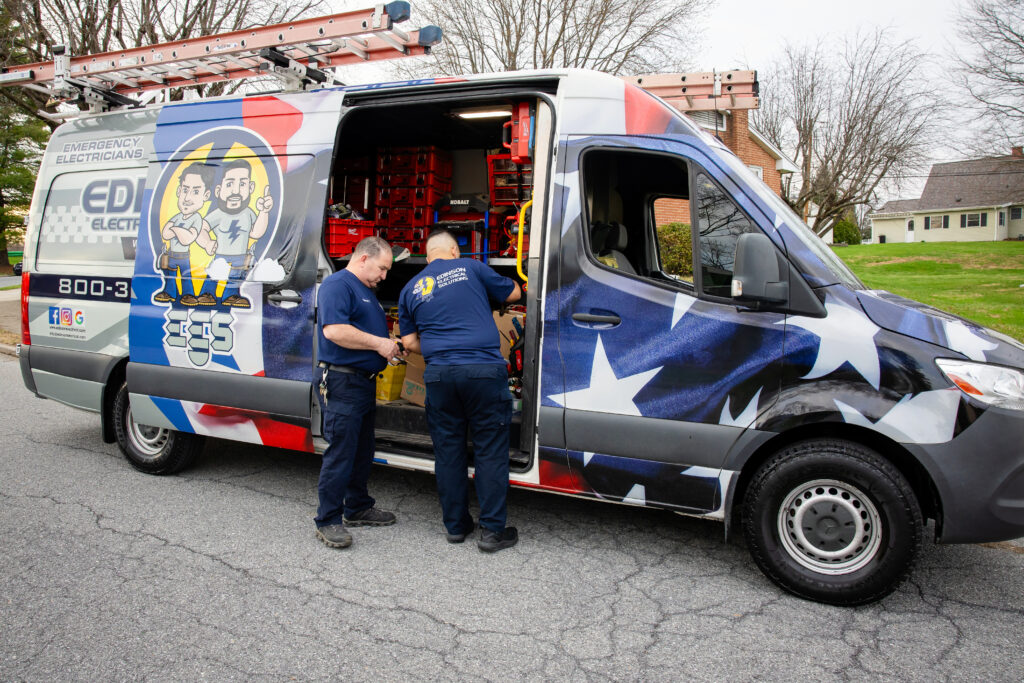
Edinson Electrical Solutions is a family owned and operated local business, licensed and insured in the Commonwealth of Pennsylvania, working out of 3049 Birch St in Hokendauqua. We live in the same communities we serve, which means our reputation travels through the neighborhoods where our trucks park every day. That accountability shapes how we approach every inspection, every quote, and every repair. Ethos matters to us, and we would rather explain that a component has years of service left than sell a replacement nobody needs. Homeowners consistently tell us that the clarity of our explanations is the reason they call us back.
Our work is code compliant and built for long term reliability rather than for the quickest possible completion. Terminations are torqued to specification, conductors are sized correctly for the load and the run, and devices are installed exactly as the manufacturer intended. We take the time to label panels accurately, secure boxes properly, and leave the work area clean when we finish. Those details are invisible to most people and they are precisely what separates work that lasts thirty years from work that fails in five. Our lifetime craftsmanship warranty exists because we stand behind that standard on every job.
Scheduling before daylight saving time ends puts you ahead of the season instead of reacting to it. Call (484) 898-7788 or email info@edinsonelectrical.com to arrange your electrical inspection, and we will give you a straight assessment of where your system stands. If everything checks out, you head into winter with confidence and documentation. If something needs attention, you find out while there is still time to handle it comfortably. Either outcome is a better place to be than discovering the problem on the darkest, coldest evening of the year.